Full Description
View Full Description
Create music your way with flexible production workflows
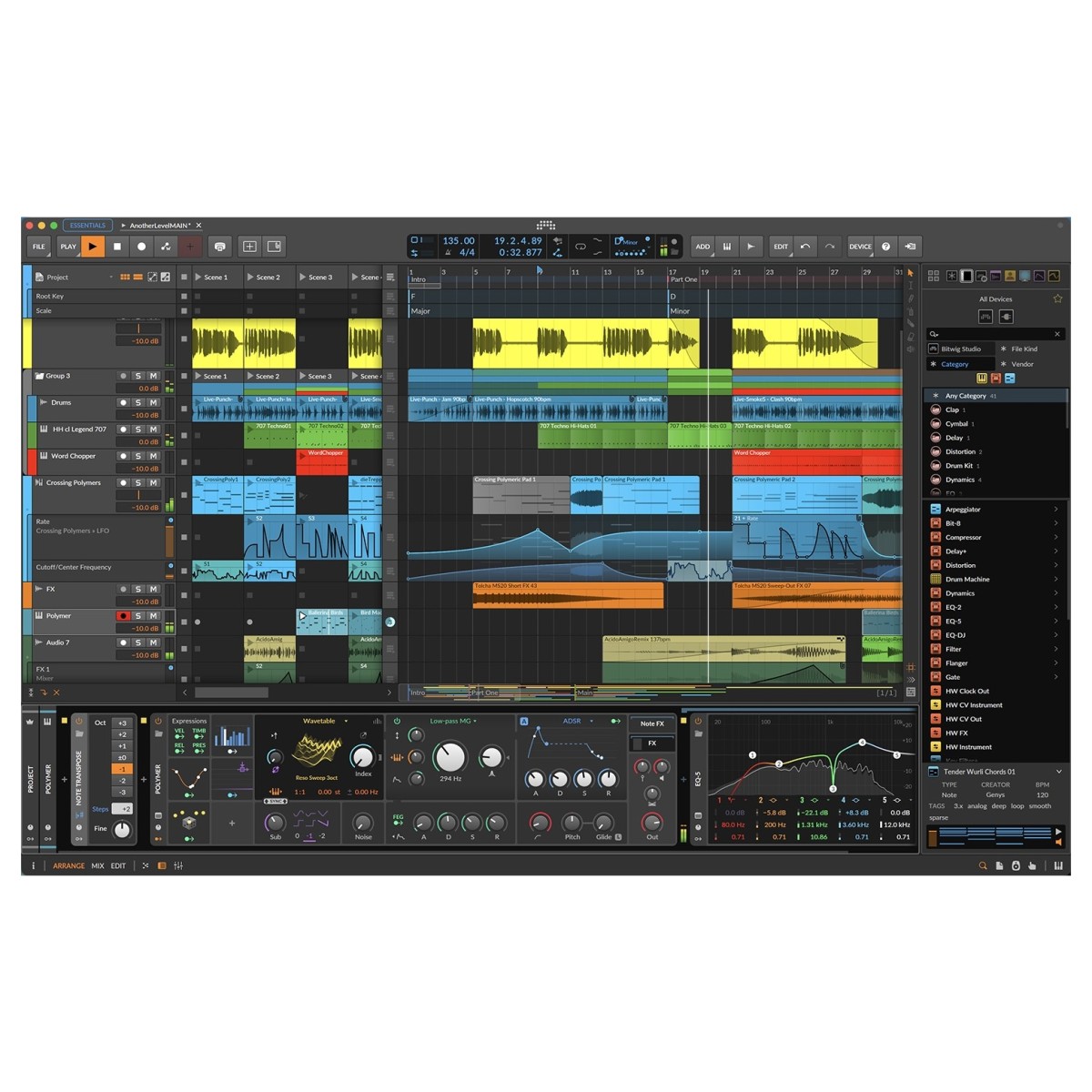
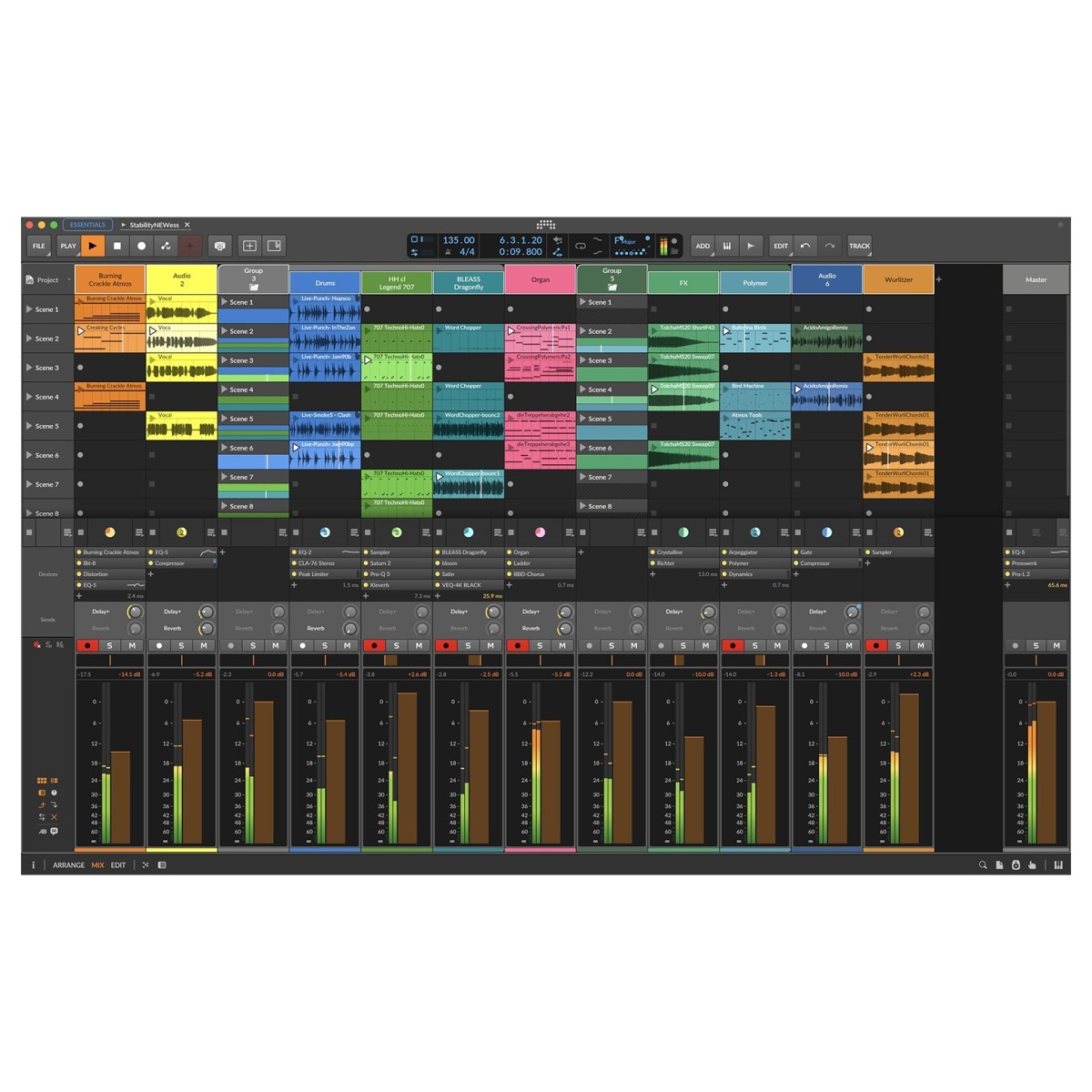
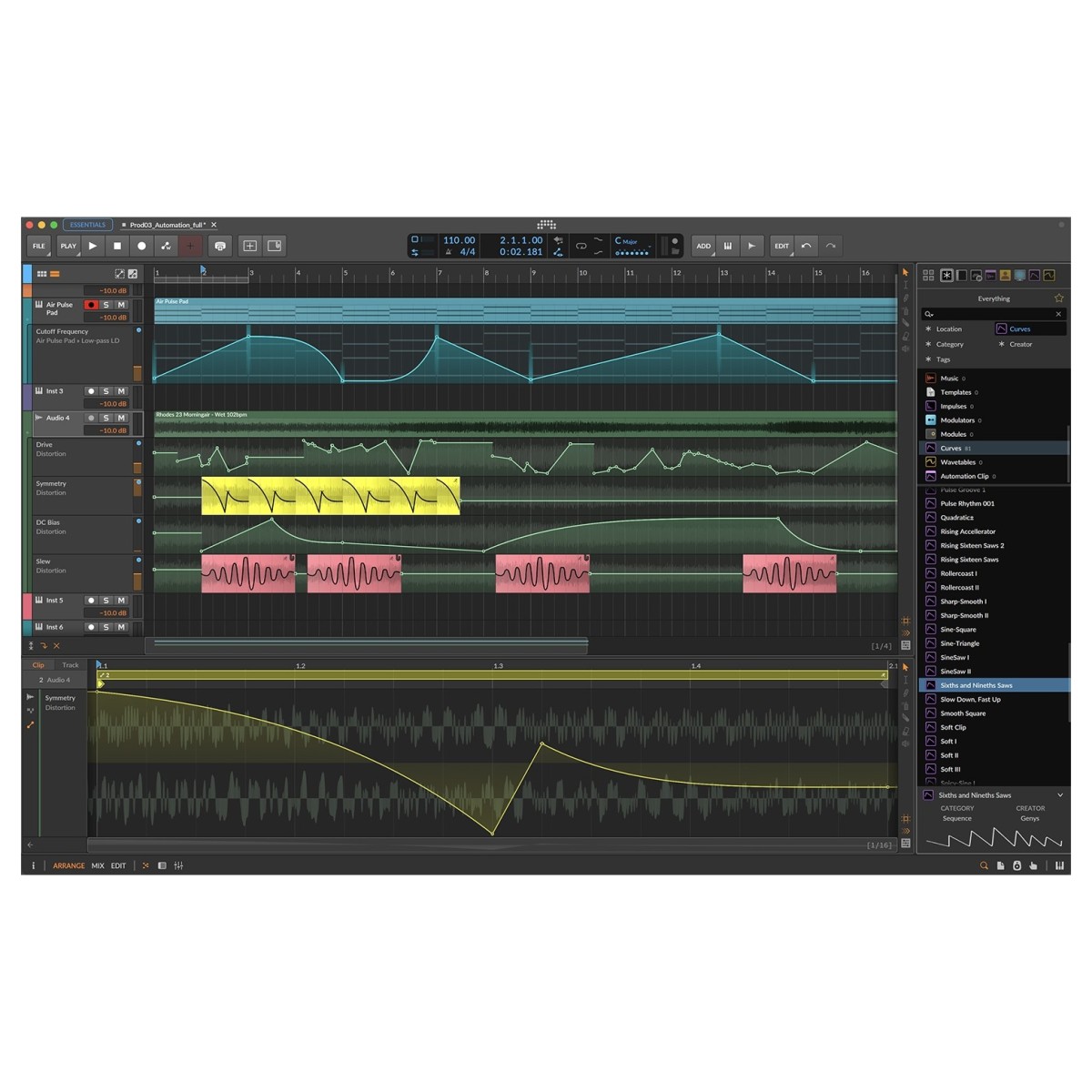
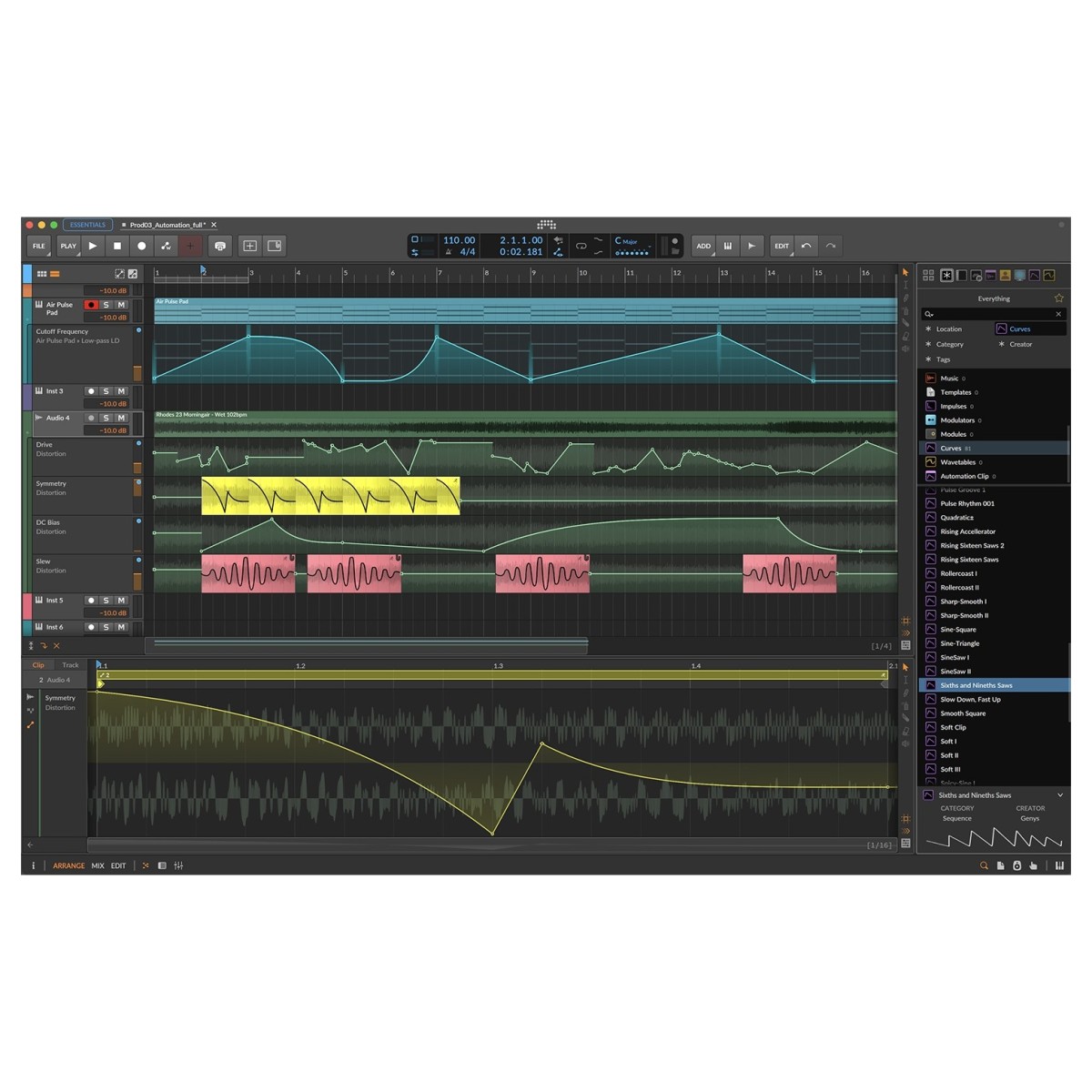
Bitwig Studio Essentials brings together traditional timeline-based production and spontaneous music creation in one streamlined DAW. The Arranger provides a familiar environment for recording, editing, and building complete tracks, while the Clip Launcher lets you experiment with loops, patterns, and musical ideas without committing to a fixed arrangement.
Both workspaces are integrated, making it easy to develop ideas in the Clip Launcher before refining them on the Arranger timeline. You can also record directly into either workspace and use Bitwig's audio comping system to combine your preferred takes.
Work faster with intuitive editing and automation
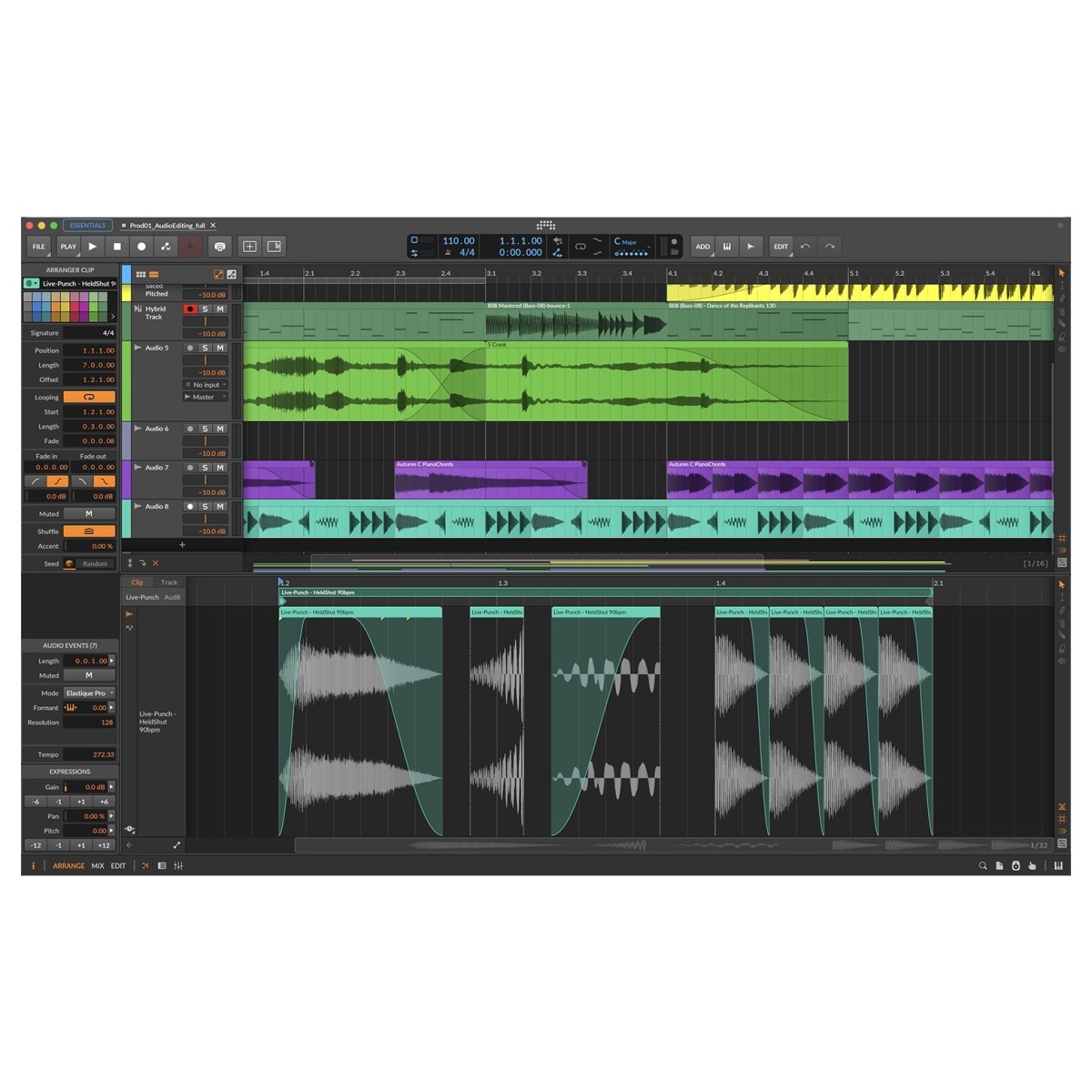
Bitwig Studio Essentials provides flexible editing tools for shaping audio and MIDI. Split audio at detected onsets, adjust pitch using curves, and stretch clips to fit your arrangement. Clip aliases also let you link repeated sections, keeping related material consistent without repeatedly copying and pasting.
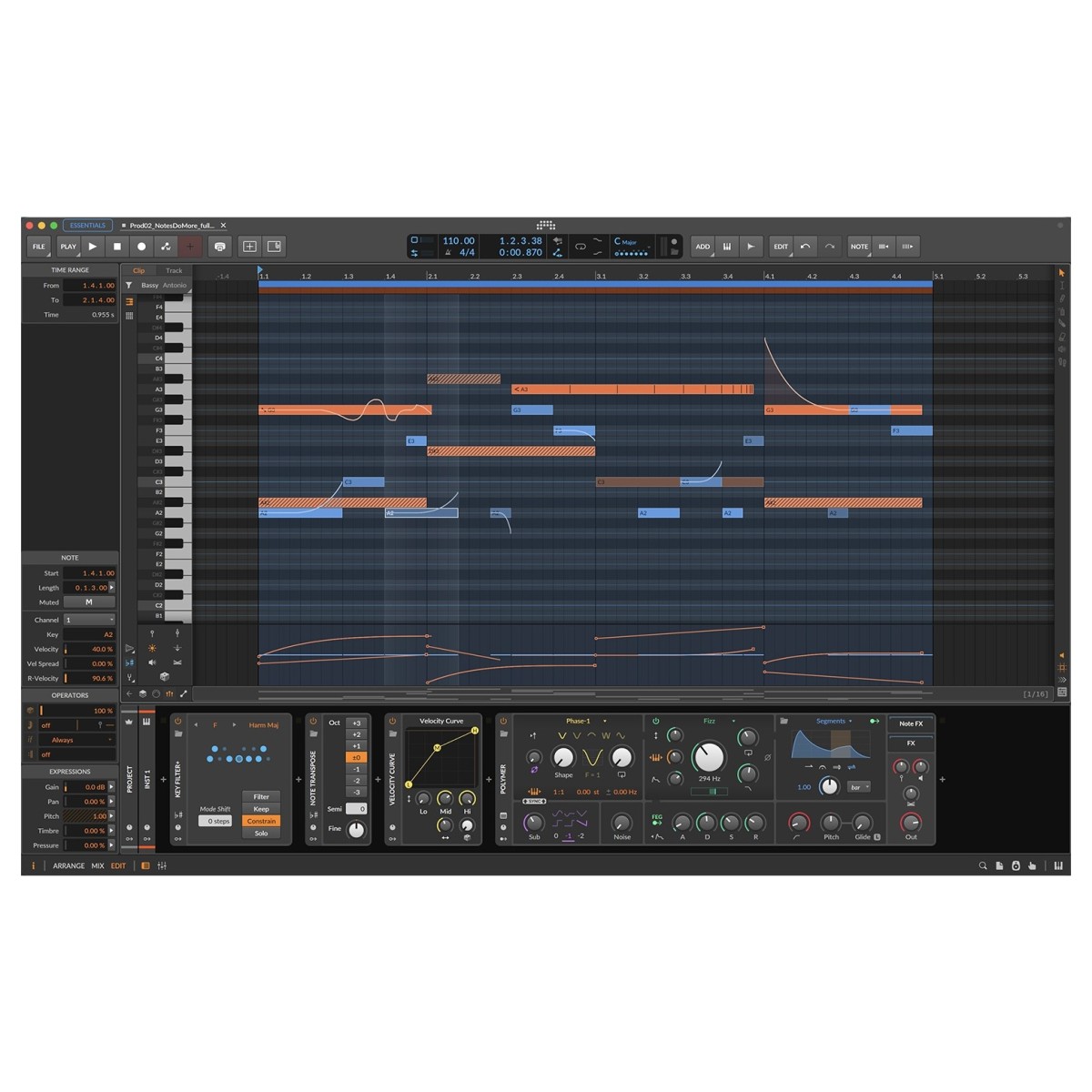
For MIDI production, expressive note editing supports individual note pressure, panning, and micro-pitch adjustments. Operators introduce additional control over when and how notes play, while hybrid tracks accommodate both audio and MIDI. Automation clips offer independent looping, adjustable start times, and stretching, allowing you to create evolving parameter changes throughout your arrangement.
Explore 52 instruments and effects
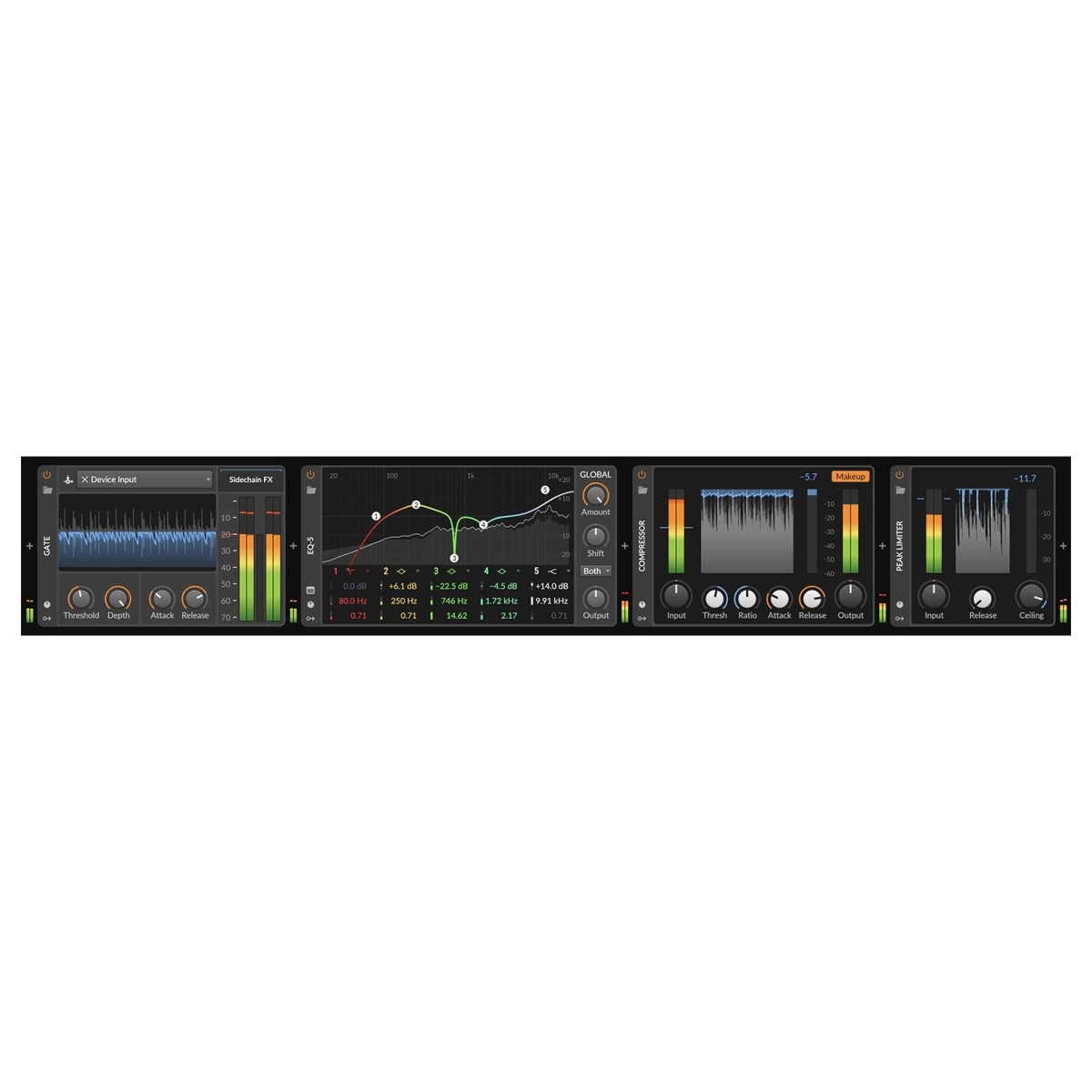
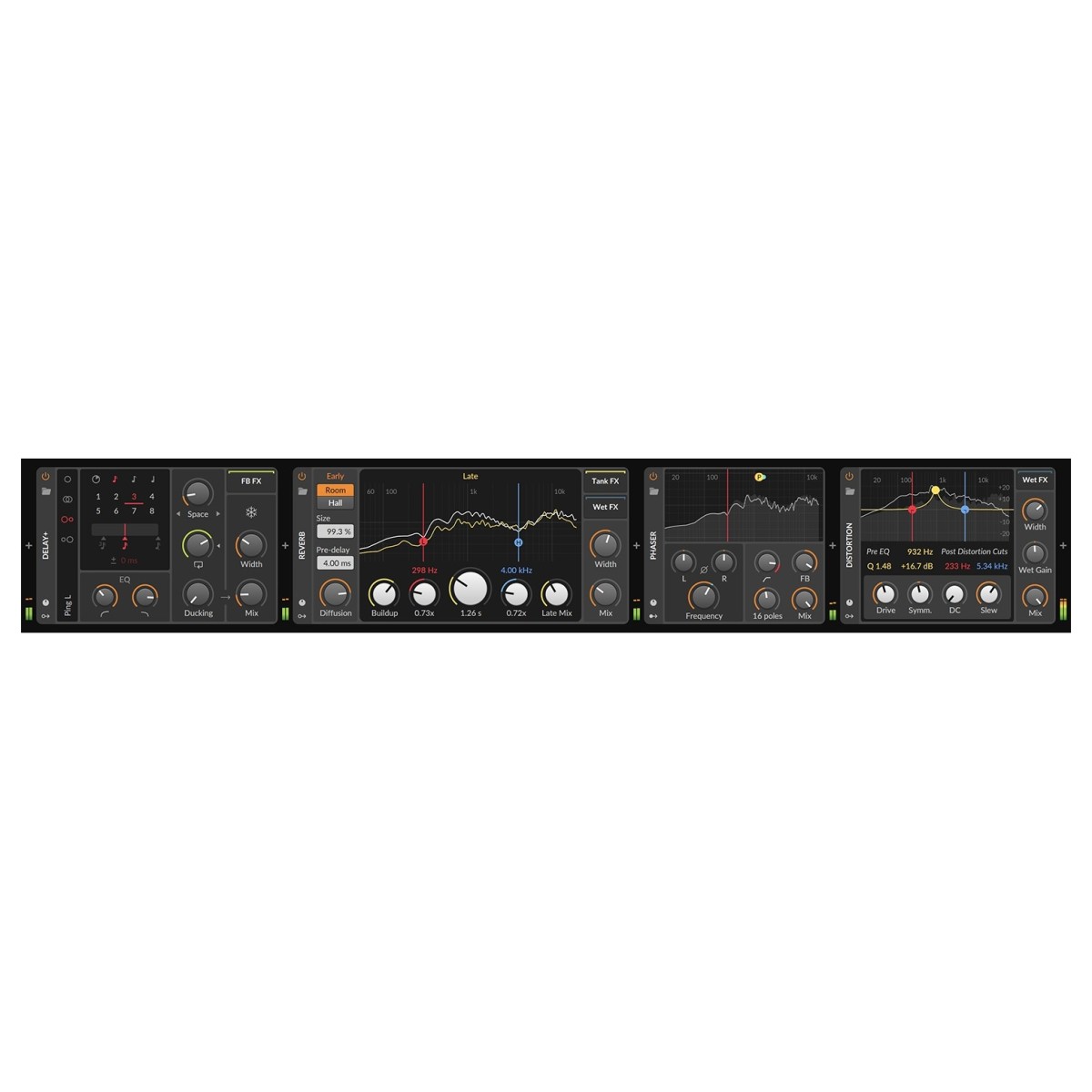
As the entry-level version of Bitwig Studio, Essentials provides a focused collection of 52 instruments and effects alongside 10 modulators. This streamlined selection covers essential production tasks while leaving plenty of room for sound design and experimentation.
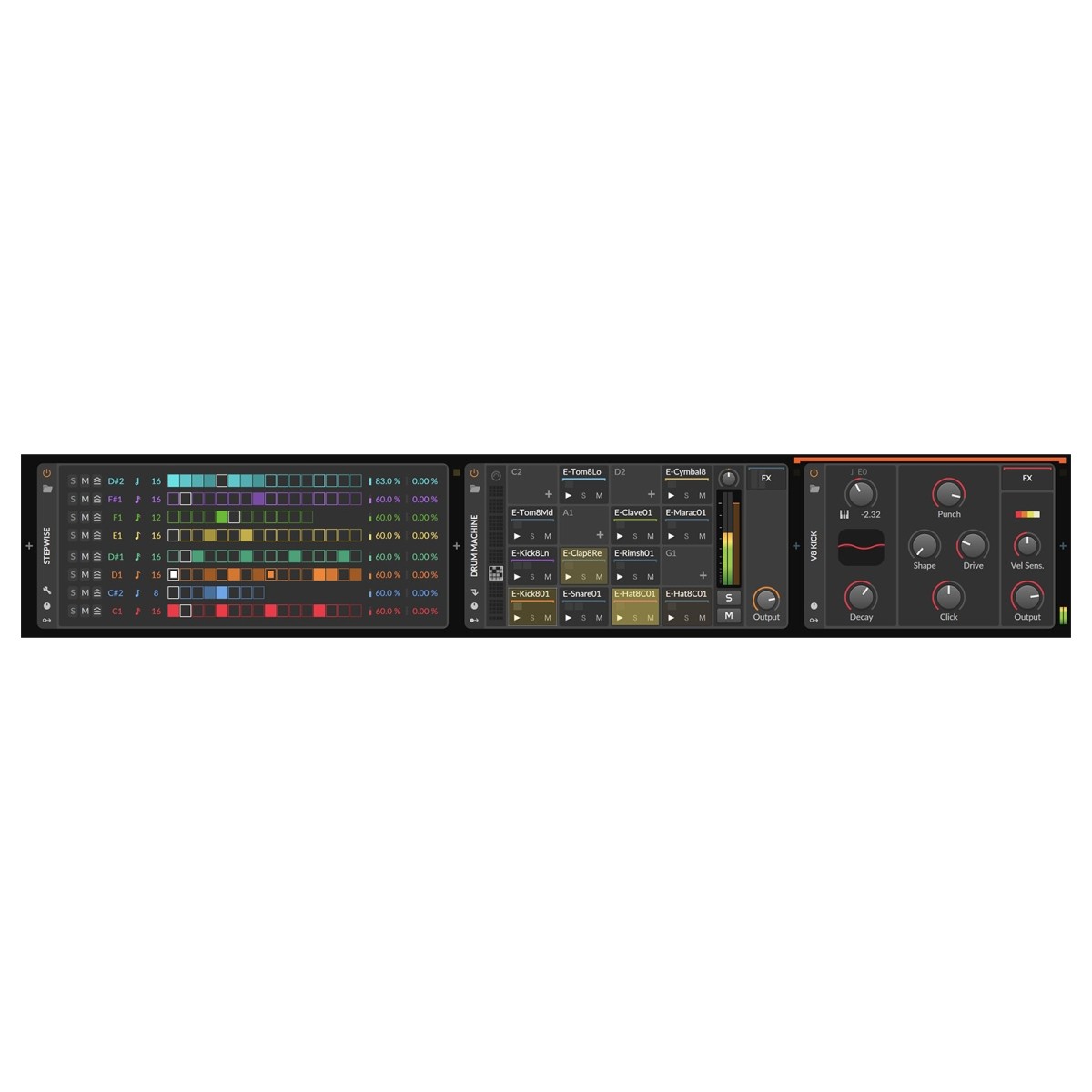
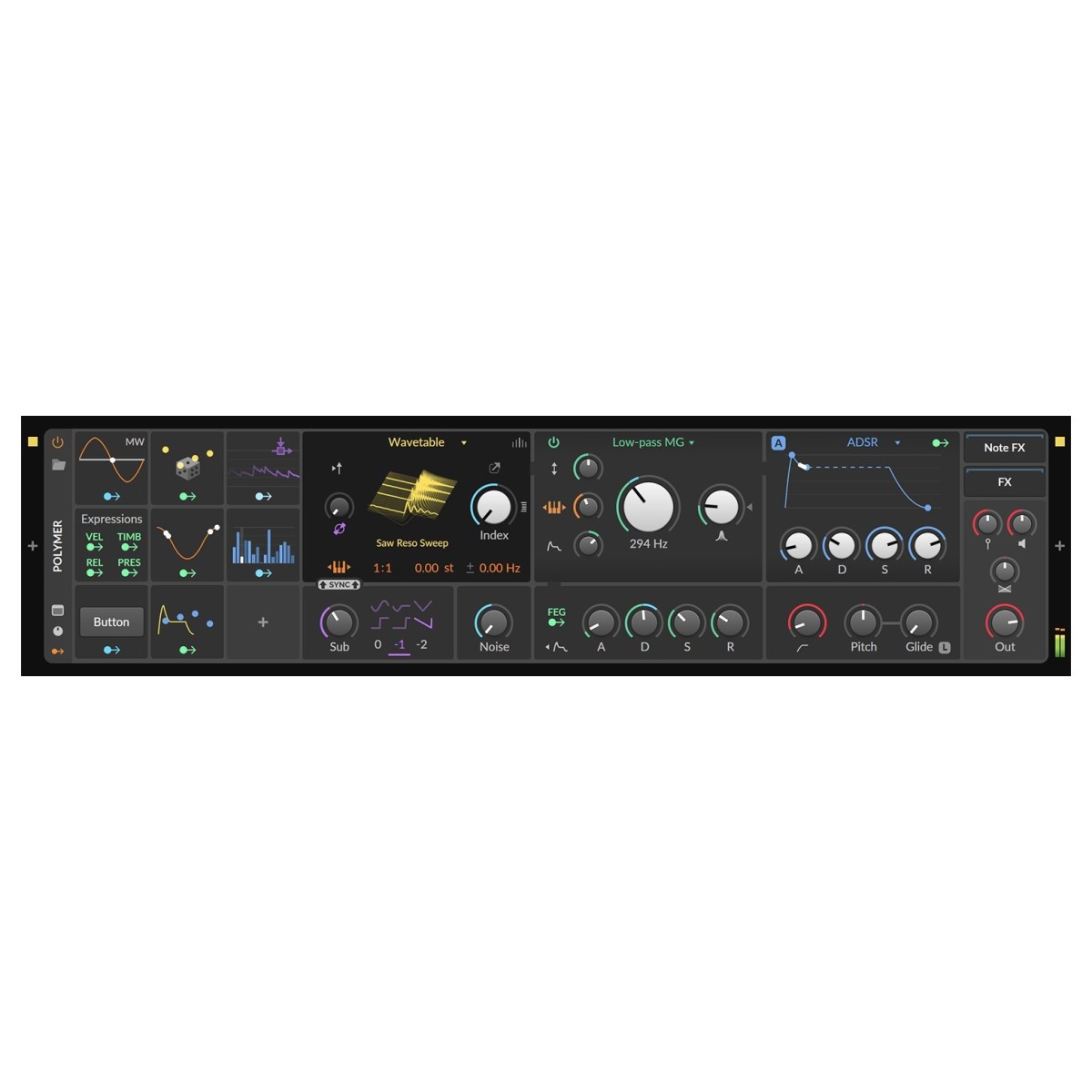
Polymer offers 270 possible combinations of oscillators, filters, and envelopes, supporting synthesis techniques including subtractive, FM/PM, hard sync, PWM, phase distortion, and wavetable synthesis. Meanwhile, Drum Machine lets you combine samples and electronic drum synthesis, with individual audio chains for each note. An included library of presets, loops, and samples provides ready-made material for developing tracks.
Slice and rearrange audio with the updated Sampler
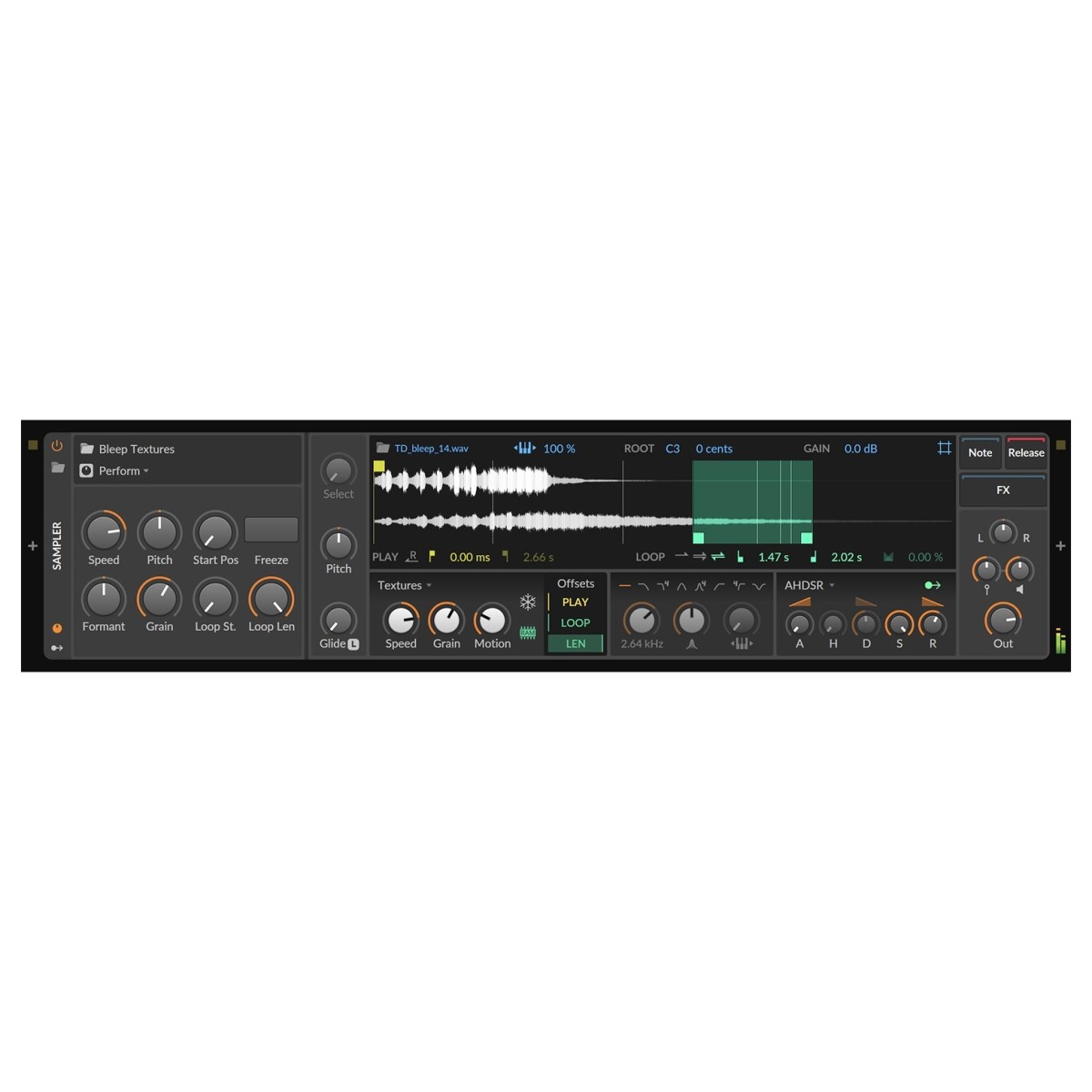
Bitwig 6.1 introduces a redesigned Sampler with advanced slicing capabilities across all playback modes. Divide audio into individual sections using automatic onset detection, beat divisions, pitch information, or manually positioned slice markers.
Once sliced, individual sections can be triggered through MIDI notes, velocity, or the Select parameter. This makes it easy to turn drum loops into playable kits, rearrange vocal phrases, or build entirely new rhythmic patterns.
Per-slice looping and modulation provide further creative control, allowing each section to respond differently to playback and parameter changes. You can also transfer clips directly from the Arranger or Clip Launcher into Sampler for immediate editing.
Automatically detect pitch and tempo
The updated Sampler includes intelligent pitch analysis, reducing the need to manually determine the root note of imported audio. Once analysed, samples can dynamically follow the notes you play, making it easier to transform recordings into melodic instruments.
Pitch analysis works across playback modes, including sliced and multisampled material. In Repitch mode, playback speed adjusts dynamically to follow incoming notes, creating unusual pitch-tracking effects.
Automatic tempo detection also helps samples synchronise with your project. Link a loop to the project BPM and it will respond to tempo changes, reducing the time spent manually preparing audio.
Stretch and reshape audio with Spectral mode
The new Spectral playback mode introduces real-time time-stretching that lets you adjust sample speed independently of pitch. This is particularly useful for adapting drum loops, vocals, and melodic phrases to different tempos while maintaining their original tuning.
Preserve Onsets helps maintain transient definition during stretching, keeping rhythmic material more consistent as playback speed changes. Spectral also provides detailed timbral processing. Formant controls let you reshape the character of audio, while harmonic bending and scale-based harmonic quantisation introduce new ways to manipulate pitch content. These tools make it possible to move beyond conventional sample playback and develop more experimental textures.
Build evolving textures with Fragments granular playback
Fragments is a new granular playback mode in Bitwig 6.1, capable of generating up to 256 independent grains per voice. Each grain has adjustable playback speed, direction, position, and size, giving you detailed control over how samples are reconstructed.
Slow down playback to create sustained textures, introduce random motion for evolving soundscapes, or synchronise grains to the project tempo for rhythmic effects. Grain envelopes can be shaped for smooth or more percussive results, while repetition settings allow individual grains to repeat up to 16 times. This makes Fragments useful for atmospheric pads, unusual rhythmic patterns, and experimental sound design.
Add vintage character with hardware-inspired processing
Bitwig 6.1 expands Sampler's Repitch mode with two hardware-inspired processing characters. Analog introduces saturation and tape-style colouration, while Digital recreates characteristics associated with classic 1990s samplers and more pronounced digital processing. These processing options can operate polyphonically, allowing different voices to respond independently.
Cycles mode also receives new sound-shaping controls, including pulse-width adjustment, phase modulation, and odd/even harmonic balancing. Engaging Freeze turns the sample into an oscillator-like sound source, while the Duophonic option blends two Cycles engines for smoother transitions.
Create expressive instruments with improved multisampling
Sampler's updated multisampling tools make it easier to build instruments from multiple recordings. Drag several samples onto a track to create a round-robin instrument, or use a modifier to layer samples with automatic tuning.
Individual zones can be muted or soloed during editing, while the Histogram provides a quicker way to adjust values across multiple selected zones. Live Select Updating also enables transitions between samples using expressive controls such as note pressure or modulation. Additional improvements include onset snapping, adjustable loop behaviour, clearer playhead visualisations, and a new Bell filter for shaping individual voices.
The new Tuner device uses Bitwig's updated pitch detection technology to provide an additional tool for analysing audio.
Bring your rekordbox library into Bitwig
Introduced in Bitwig 6.1.2, rekordbox integration connects DJ music collections with Bitwig Studio Essentials on Windows and macOS. You can browse your existing rekordbox library directly inside Bitwig, searching and filtering tracks by artist, playlist, file type, and other criteria. Opening a track automatically creates a Bitwig project matched to its BPM and musical key. Hot Cues, arrangement structure, and vocal placements are also displayed, helping you identify sections for editing and remixing.
For DJs exploring music production, this makes it easier to rearrange existing tracks, introduce BPM-matched loops, and add new synthesiser parts that complement the original key.
Connect your hardware and customise your studio
Bitwig Studio Essentials supports external music equipment through MIDI, CC, CV, Gate, MIDI Clock, and MIDI Timecode. These connections allow you to sequence external instruments, synchronise compatible hardware, and control software parameters using physical controllers.
The adaptable interface supports up to three displays and dedicated multi-touch interaction, while the context-aware browser helps you locate sounds and devices quickly. Multiple projects can also remain open simultaneously, allowing you to transfer tracks, clips, and devices between sessions. Built for Windows, macOS, and Linux, Bitwig's modern architecture also supports CLAP plug-ins and the DAWproject format, providing flexibility as your production setup develops.
Specifications
- Operating system:
- Mac: macOS 12 or later (including Monterey)
- Windows: Windows 10 - 11 (64-bit)
- Linux: Ubuntu 24.04 or later, or a modern distro with Flatpak installed
- CPU:
- Mac: An Apple silicon CPU or 64-bit Intel with AVX2 support
- Windows: AMD or Intel CPU with AVX2 support
- Linux: 64-bit x86 CPU with AVX2 support
- Display: Minimum 1280 x 768 pixel screen resolution
- RAM: Minimum 4GB RAM
- Disk space: 11GB for full content installation
- Activation: Internet connection to download bundled content (not included with installer)
- Product code: 1271-24