Full Description
View Full Description
Harmonic, power tube, and photocell tremolos
This pedal features three distinct tremolos to choose from, each designed to offer a sonically complex, harmonically rich and tonally warm delivery. The first tremolo is a 1961 Harmonic, which delivers a dual-band filtering effect that emphasizes the low and high frequencies to create soothing pulses with shades of a mild phaser or modulator.
The second tremolo is the ’63 power tube, which uses the LFO signal to directly influence the push-pull stage, creating a fluctuating gain and subsequently producing a dirtier, bog type effect. The last featured tremolo is the ’65 photocell, which recreates classic photo-tremolo circuits, delivering an effect with hard characteristics that move between two levels, mimicking a square wave.
A new world of reverbs
Using unique algorithms, Strymon have meticulously designed the Flint with three unique, vintage style reverbs that deliver high quality soundscapes to transport you to another dimension. The '60s spring tank reverb offers a unique reincarnation of a full-sized two-spring tank that was commonly used in old-school amplifiers – this delivers an incredibly complex reverb that is full of depth thanks to the segments of different delay times which provide additional layering.
The '70s electronic plate reverb pays homage to some of the earlier digital reverbs, offering multiple delay lines in a parallel configuration, with each delay having multiple output taps and filter feedback paths to deliver a smooth and rich reverb with a quick build up time. Finally, the '80s hall rack – which is inspired by '80s digital microprocessor rack reverbs, delivers a dense, warm reverb with distinct reflections and a slower build-up.
Intuitive controls
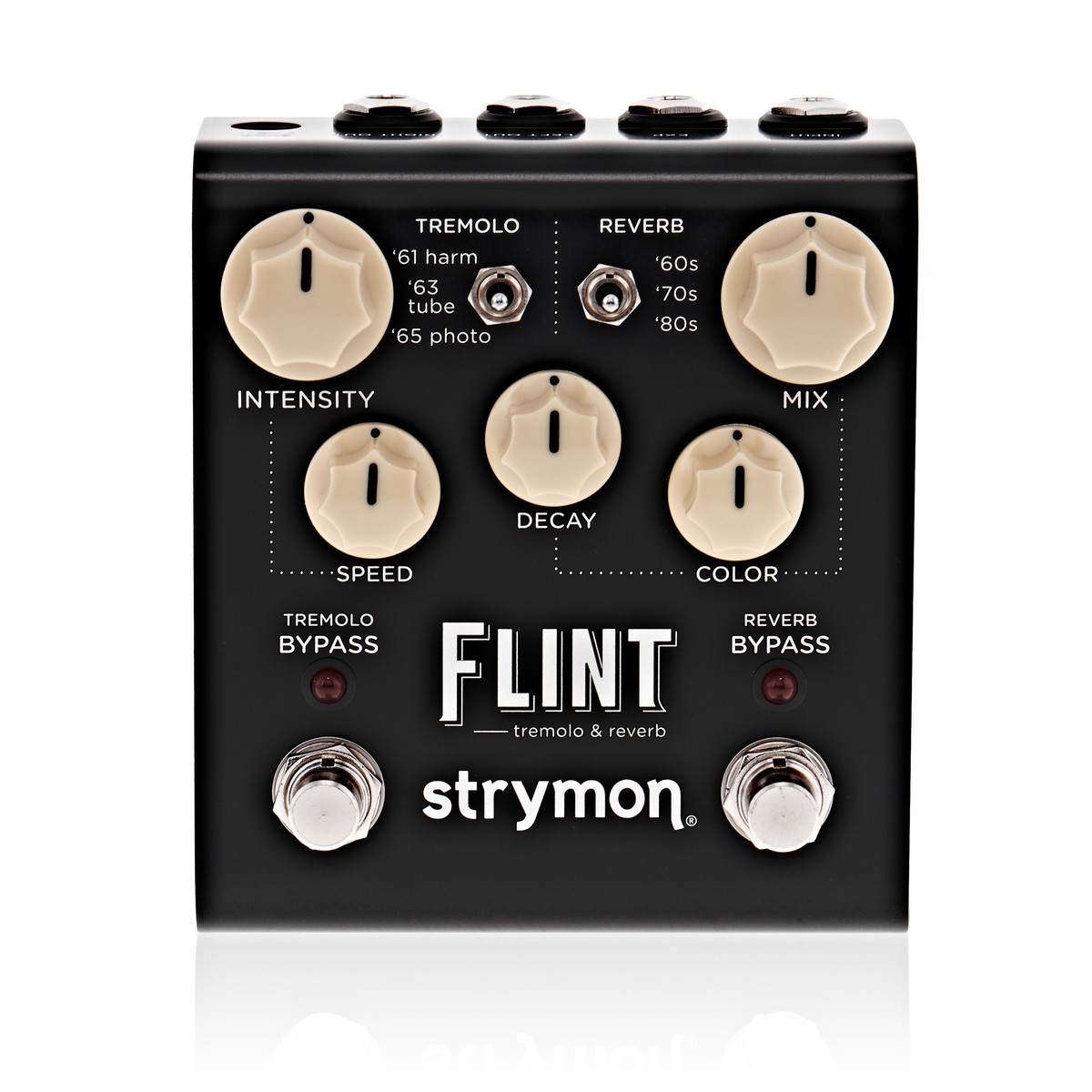
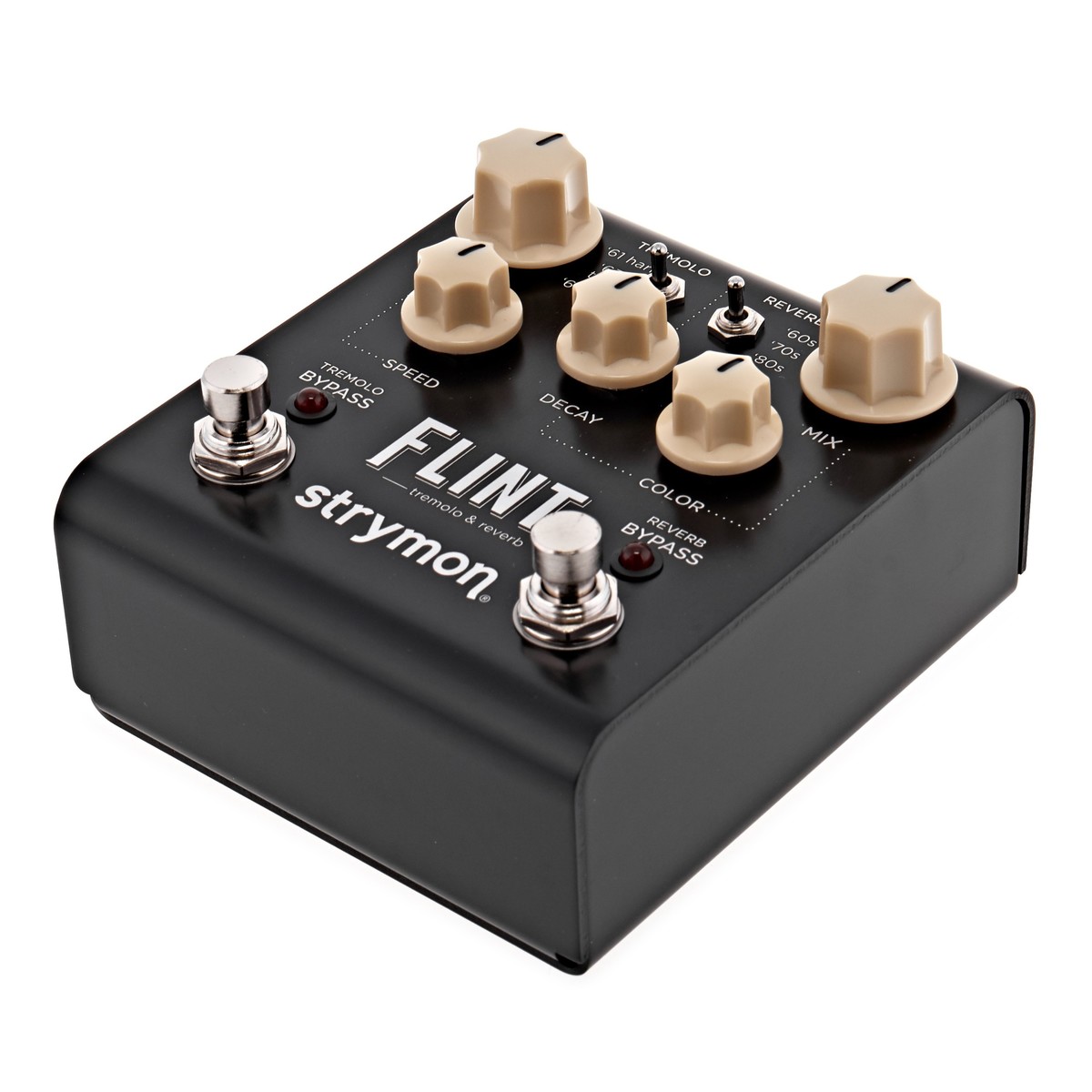
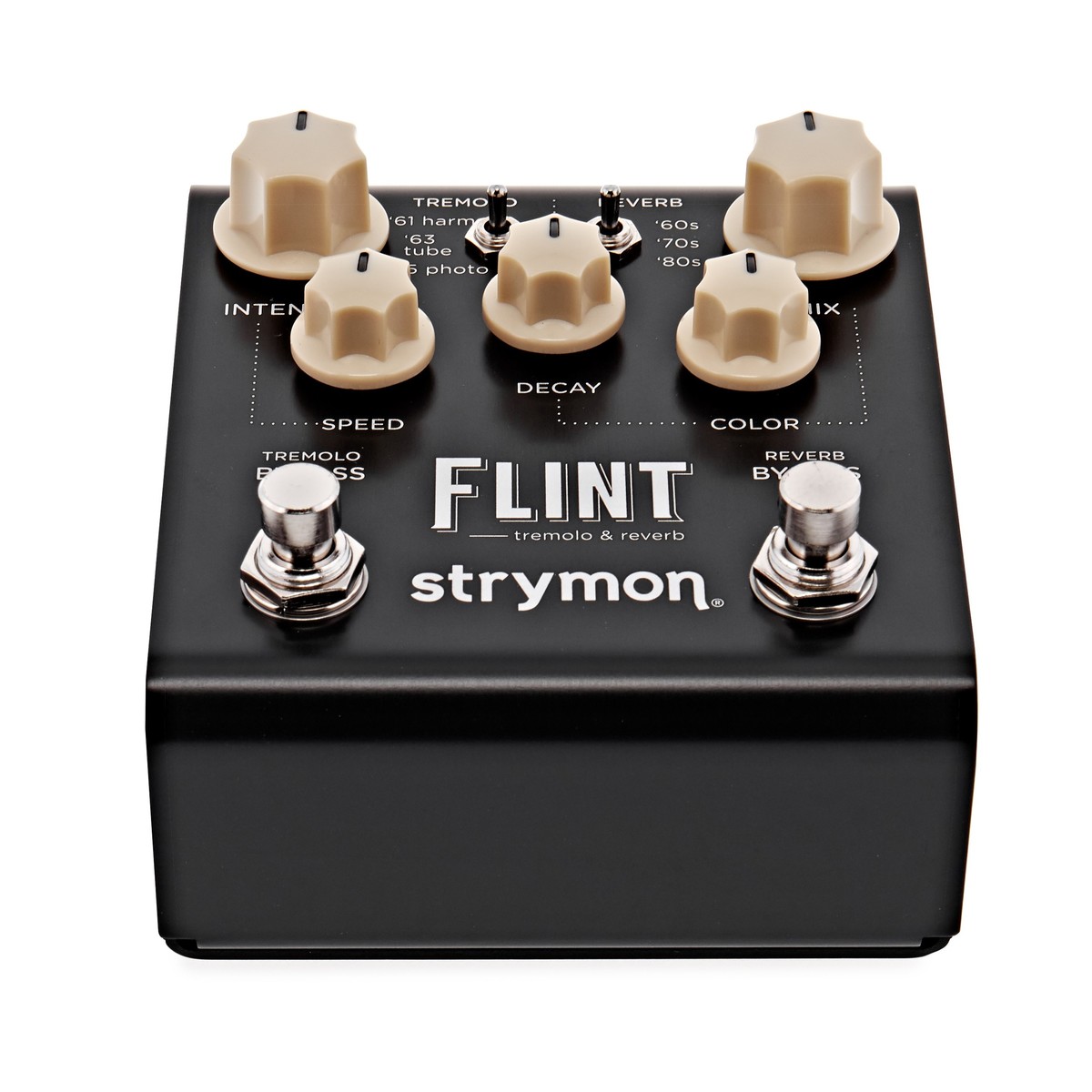
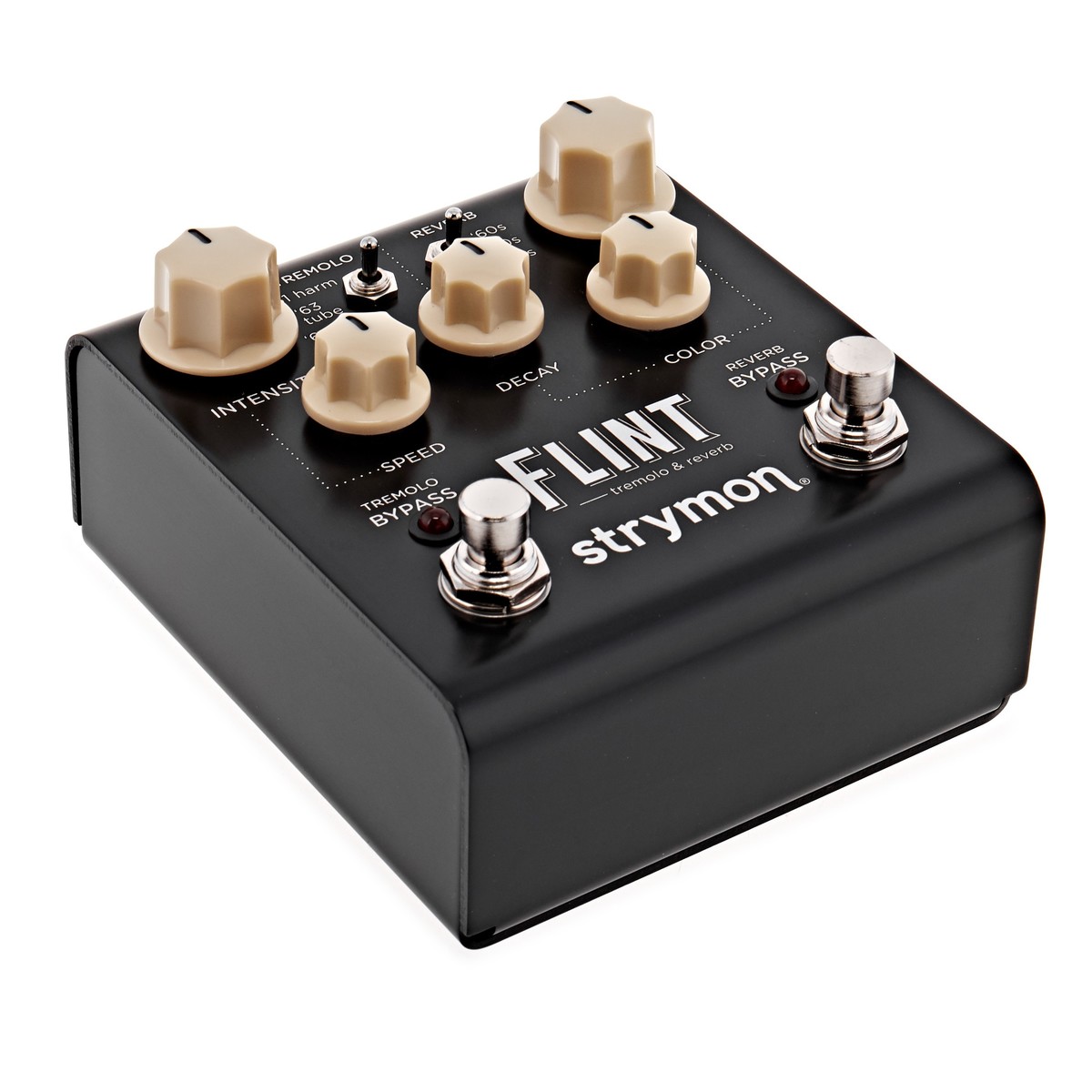
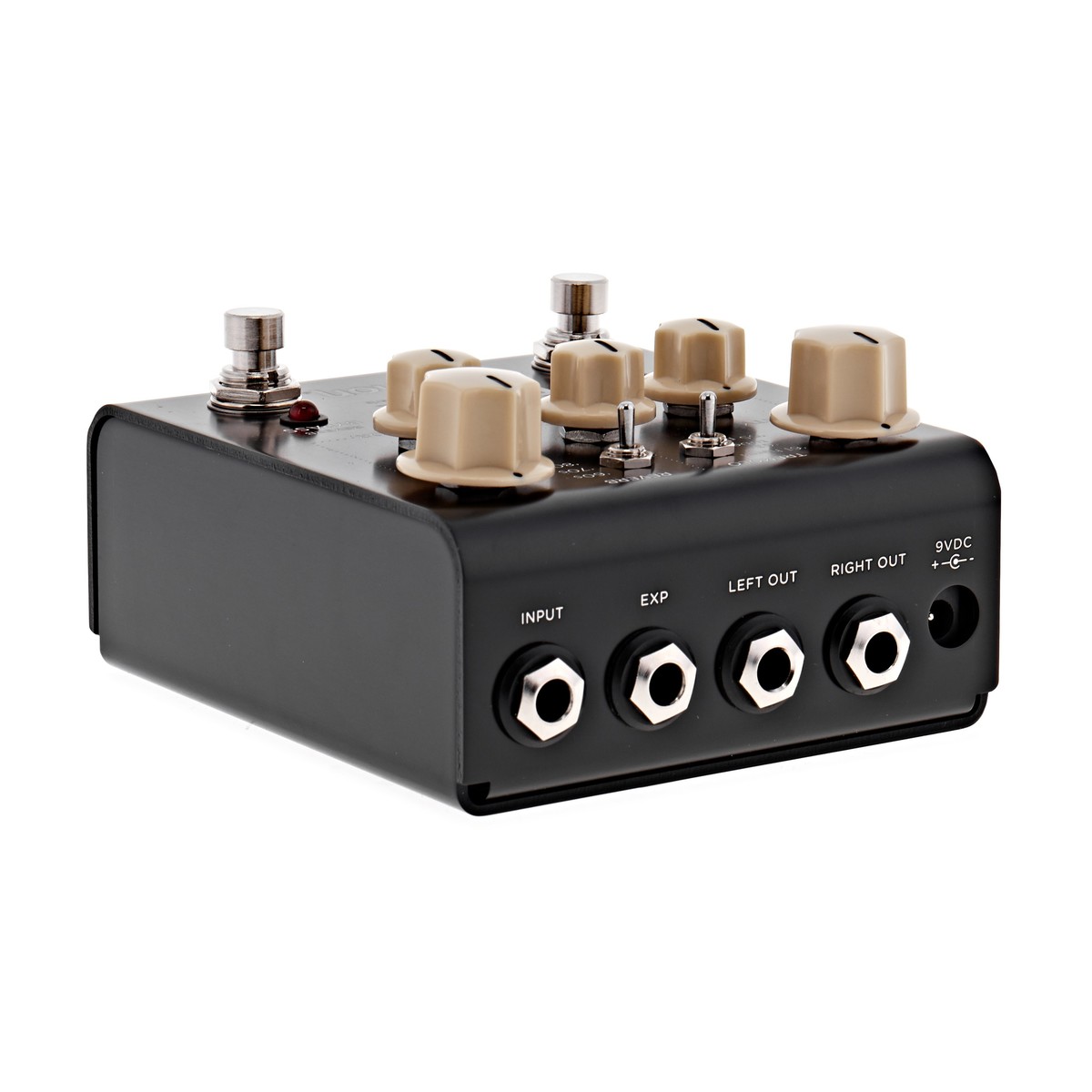
Featuring 5 control knobs that can be used to tweak 8 different parameters, giving you control over the effects characteristics and shape. There is an intensity control that can be used to dial in the amount of depth that the tremolo delivers, whilst its second function is used to give the tremolo +/-3bd of boot or cut. The mix controls the amount of wet to dry mix the pedal delivers, while the secondary function offers +/-3bd of boost or cut to the reverb. The speed knob controls the speed of the LFO frequency, changing it from slow to fast. Its second function controls the tap subdivisions of an external tap pedal, acting as a 4 position switch changed the pedal’s subdivisions.
The decay control shapes the time light of the reverb, changing it from short to long, while its second function acts as a two-position switch that changes the order of the effects. By twisting the knob to the left the pedal produces the reverb before the tremolo, and to the right makes the pedal produce the tremolo before the reverb. Lastly, the colour knob controls the reverb’s tone, going from light to dark.
Specifications
- Casing: Aluminium
- Frequency response: 20Hz – 20kHz
- Tremolos: ’61 Harmonic, ’63 Power Tube, ’65 Photocell
- Reverbs: ’60s Spring Tank, ’70s Electronic, ’80s Hall Rack
- Controls:
- Intensity / Tremolo Boost/Cut
- Mix / Reverb Boost/Cut
- Speed / Tap Subdivision
- Decay / Effect Order
- Colour
- Tremolo Switch
- Reverb Switch
- Tremolo Bypass Footswitch
- Reverb Bypass Footswitch
- Inputs: Mono, Expression Pedal
- Outputs: Stereo
- Power Consumption: 9V DC Centre Negative 250mA Current (Included)