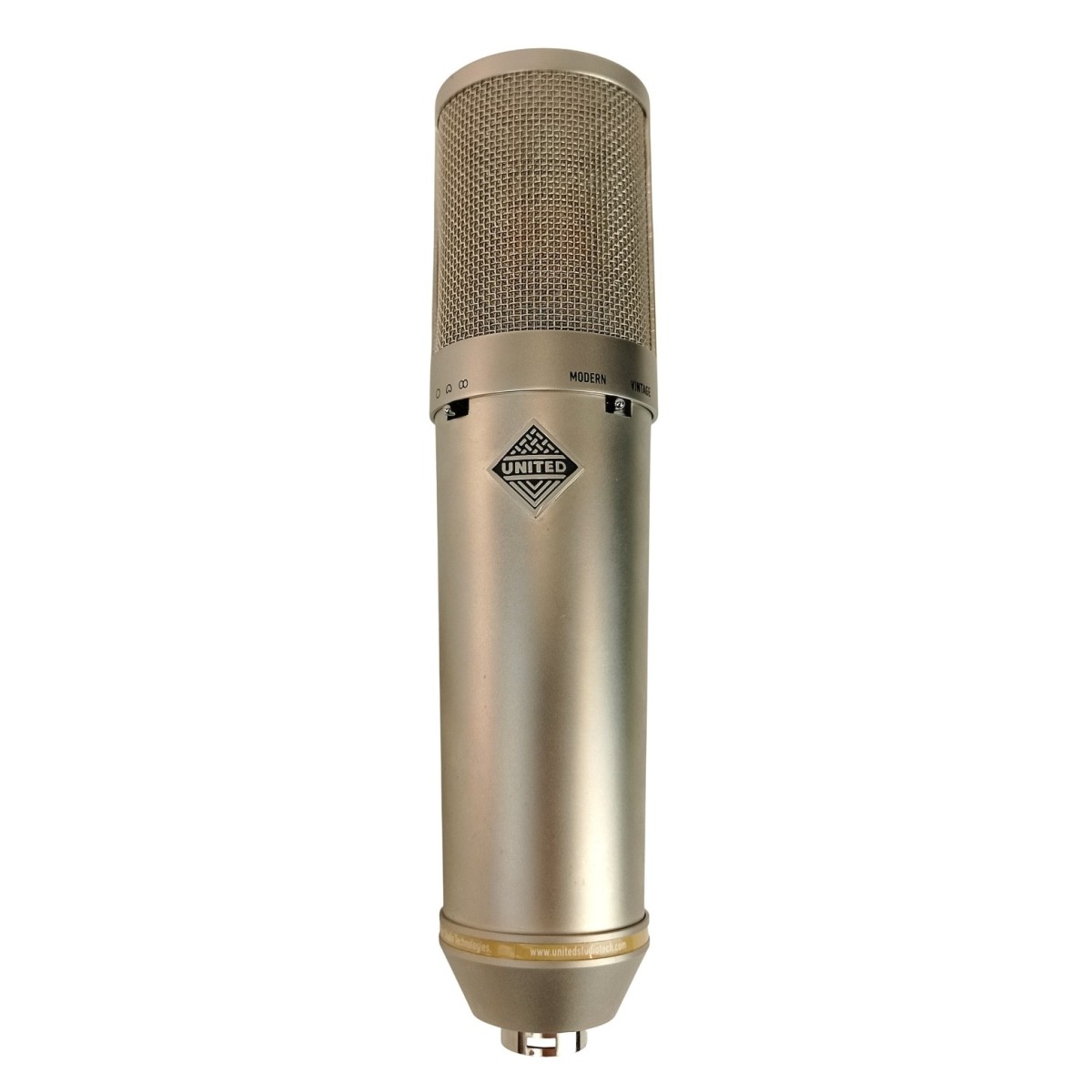
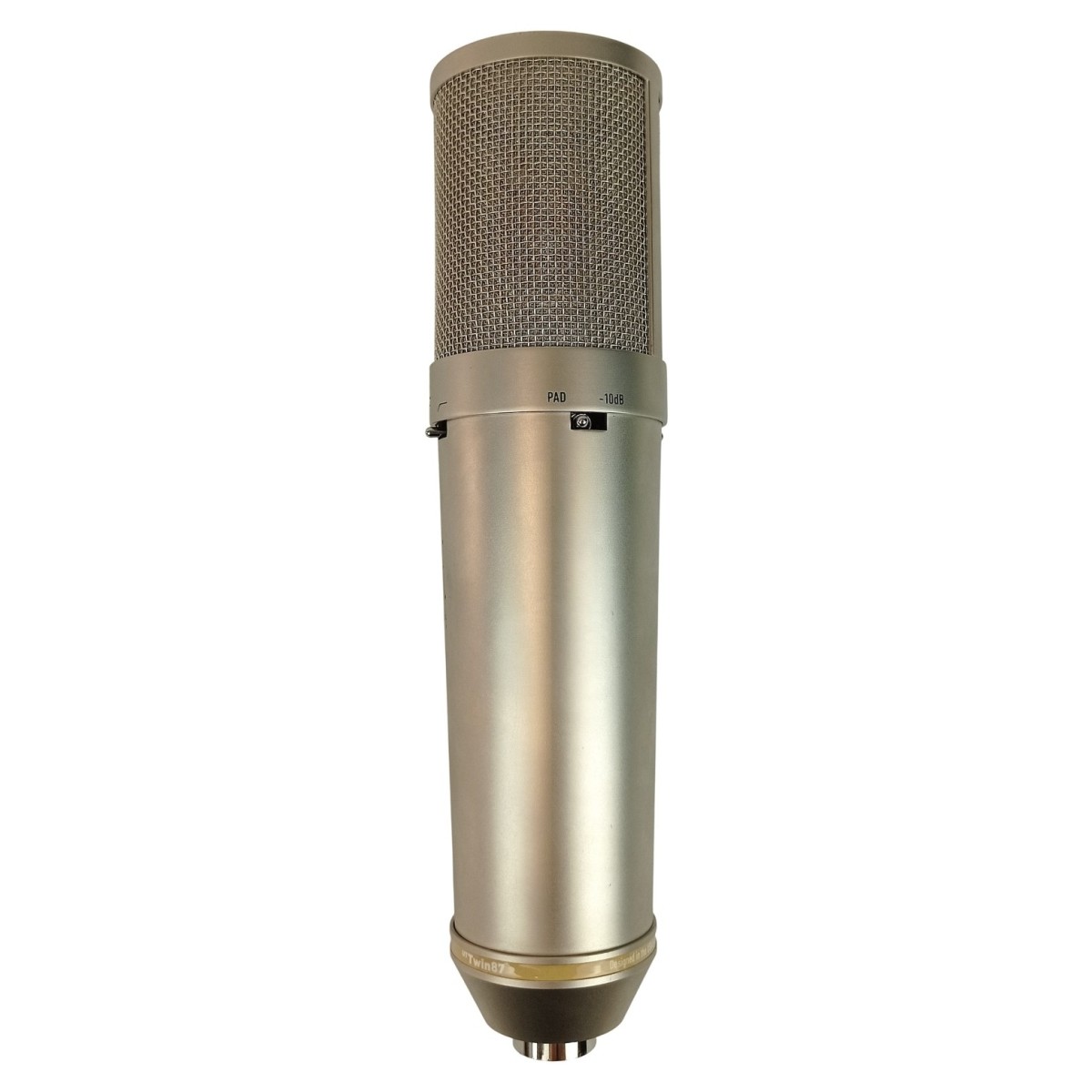
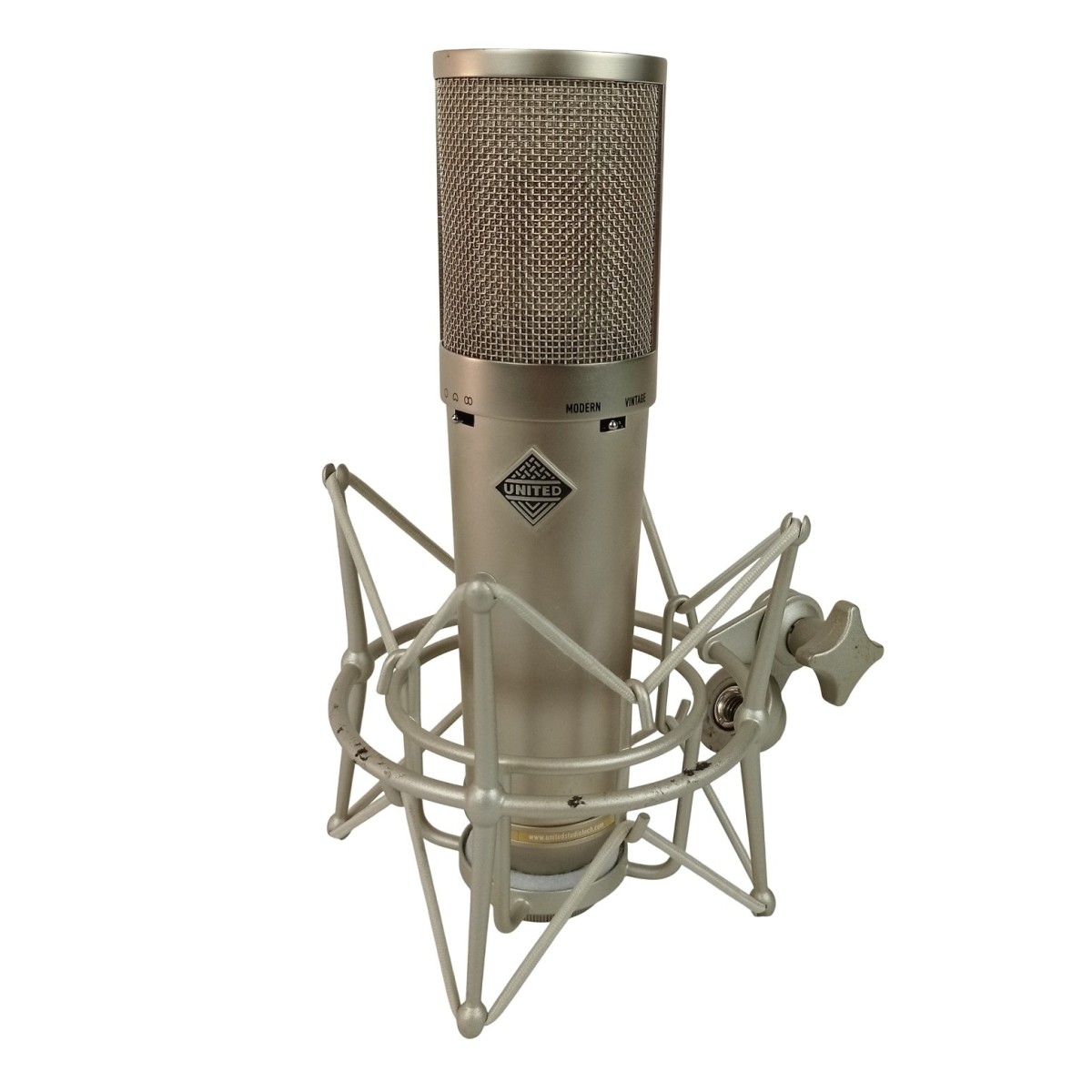
United Studio Technologies UT TWIN87 Condenser Microphone - Secondhand


This product is currently unavailable for delivery to your country
Key Features
- Very Good condition secondhand product. Fully functional, inspected by our experts
- The definitive 87-style microphone, crafted through meticulous testing of industry classics
- Designed with a 24k gold-sputtered dual-diaphragm for immaculate acoustic properties
- Dual-topology circuit with Vintage and Modern mode delivers unique sonic characteristics
- Improved hand-wound transformer with 4x metal-mass of typical 87-style microphones
- Ideal solution for contemporary producers with versatile requirements
Secondhand condition of this item: VERY GOOD
Product Ref: 399668
Full Description
View Full DescriptionSpared no expense
For United Studio Technologies, only the best will do. This is why countless vintage U-87-style microphones were collected, dating back over 50 years to some of the earliest models available, tested and examined with painstaking detail. Under a microscope, these microphones were analysed for parts, performance and sound quality with the aim of replicating the best aspects of each to create the perfect vintage 87-style microphone available.
Not limiting the search to vintage models, modern production models were also exhaustively analysed to gain a better understanding of how the microphone has developed throughout the decades. Armed with extensive knowledge, United Studio Technologies set to work to create the definitive 87-style microphone, the UT TWIN87, taking the best of old and new.
Dual topology design
Taking on board the unique character and sound quality differences of the modern and vintage iterations of the legendary microphone, the UT TWIN87 needed a way to accurately portray these sounds. Straying away from using a simple EQ curve to correct for any frequency differences, the UT TWIN87 makes use of a dual circuit topology design to achieve this difficult feat.
Switchable via the onboard toggle, the UT TWIN87 enables you to switch between modern and vintage voicing on the fly to find the sound that's right for your production, mix and instrument. Vintage mode polarises the K87-style capsule directly from your source of phantom power, engaging the dual backplate into the circuit. In line with the best vintage examples that were scoured during research and development, this mode will enable the UT TWIN87 to create a soft and forgiving tone that's ideal for delicate female vocals, dynamic piano performances and even orchestral strings.
Switching to the modern mode, the UT TWIN87 utilises the onboard JFET oscillator to feed a hotter signal directly to the amp circuit. Typical of modern 87-style microphones, this hotter signal delivers a punchier and louder sound, jumping out of your speakers and taking the foreground of your mix. Ideal for powerful rock vocalists, blistering electric guitar cabinets or for punchy room microphone sounds on a drumkit, the modern mode is ideal for contemporary producers and mixing engineers that require extra attack in your sound.
Buit from the ground up
Every component and part within the TWIN87 microphone has been hand-selected and designed to deliver precision accuracy and authentic sonic characteristics. Redesigned from the ground up, the K87-esque dual-diaphragm backplate capsule is precision milled from brass and skinned with 6-micron Japanese mylar. Sputtered with 24K gold, the acoustic properties of the UT TWIN87 are unquestionable, capturing fast transients with ease under a wide frequency range from 20 Hz - 20 kHz with high SPL levels up to 127dB.
Newly designed transformer
Often limiting the sonic fidelity and character of the 87-style microphone, the transformer size plays a large role in the overall microphone response. A common theme found throughout vintage examples was that larger transformer designs carry more desirable sonic characteristics. Staying true to the design and build-quality ethos, the United Studio Technologies UT TWIN87 makes no compromises, employing a newly designed custom-wound transformer. Boasting 4x the mass of transformers found in conventional 87-style microphones, the United Studio Technologies UT TWIN87 features unrivalled headroom, ensuring no unwanted signal degradation or distortion takes place, even at ultra-low frequencies. Ideal for recording instruments such as bass guitar cabinets, the UT TWIN87's ultra-high headroom will mean that even powerful low-end instruments won't cause any clipping or interference in your recorded signal, even when at high listening volumes.
Features
- Created through meticulous testing and measuring of the best performing vintage microphones possible
- Crafted with top of the line components and parts for stunning audio performance and sound quality
- Dual-topology circuit creates two distinctive sounds
- Polarising the 87 capsule and utilising the K87-style backplate, Vintage mode is soft and forgiving
- Harnessing a JFET oscillator, Modern mode feeds a hotter signal for an upfront sound
- Optimised audio performance delivers extremely low noise floor with tremendous headroom
- Custom-made 24K gold-sputtered dual-diaphragm
- Constructed using premium proprietary components such as brass-milled dual backplate K87 capsule, multilayer ceramics, tantalum and WIMA film capacitors
- Custom-wound, large core output transformer with 4x metal-mass delivers improved headroom for crystal clear audio transfer
- Switchable modular RF filter
Specifications
Transducer
- Diaphragm: 6 micron, 24k gold sputtered Mylar
- Capsule: UT Series, 34mm brass
- Polar Pattern: Cardioid, Figure 8, Omni
Performance
- Frequency Response: 20 Hz - 20 kHz
- SPL: 117dB (no pad), 127dB (with pad)
- Impedance: 27 Ohm
- Self Noise: Less than 10dB (cardioid setting, no pad, no HPF)
Conenctors
- Output: 24k gold plated XLR, pin 2 HOT, pin 1 GND
General
- Dimensions:
- Diameter: 220mm
- Depth: 55mm
- Product code: UN-TWIN87
| Reviews of our service
View all