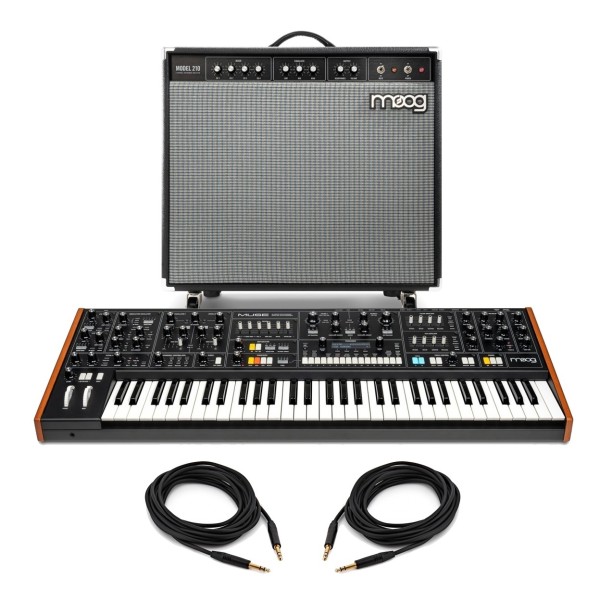
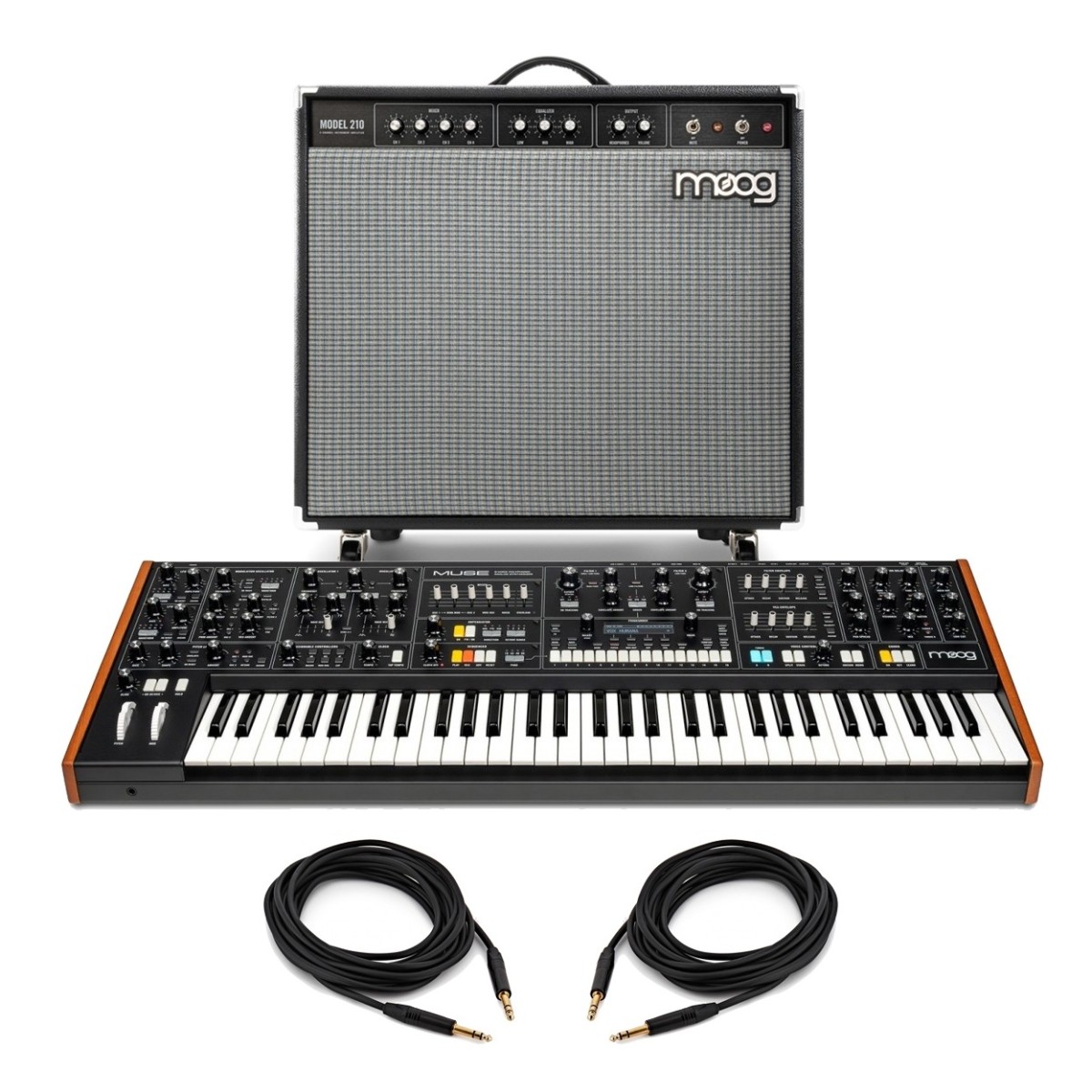
Moog Muse Polyphonic Analog Synthesizer and Moog Model 210 Amp Bundle
-
-

-
-
-
-
-
-
-
-
-

Playing videos requires marketing & advertising cookies. By pressing Play, you consent to their use, which will override previously rejected settings. To update your preferences, see our cookie policy.
-
Playing videos requires marketing & advertising cookies. By pressing Play, you consent to their use, which will override previously rejected settings. To update your preferences, see our cookie policy.


This product is currently unavailable for delivery to your country
Key Features
- Bi-timbral flexibility for rich textures
- 550W RMS bi-amplified instrument amp with Bluetooth and StereoLink
- Vintage-inspired dual transistor filters
- Advanced sequencing with microscopic editing
- Unique stereo processor and modulation oscillator
Moog Muse Polyphonic Analog Synthesizer and Moog Model 210 Amp Bundle Overview

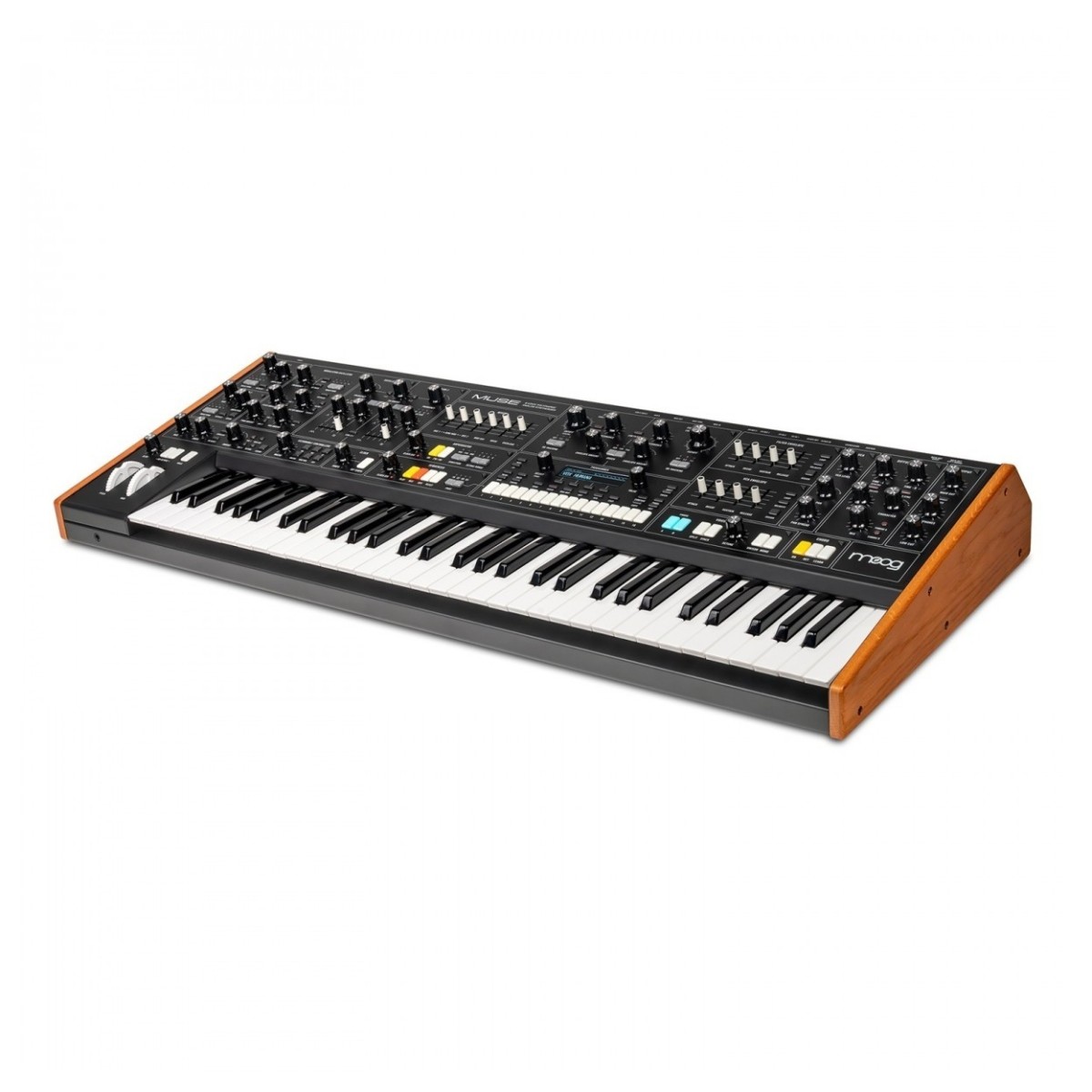
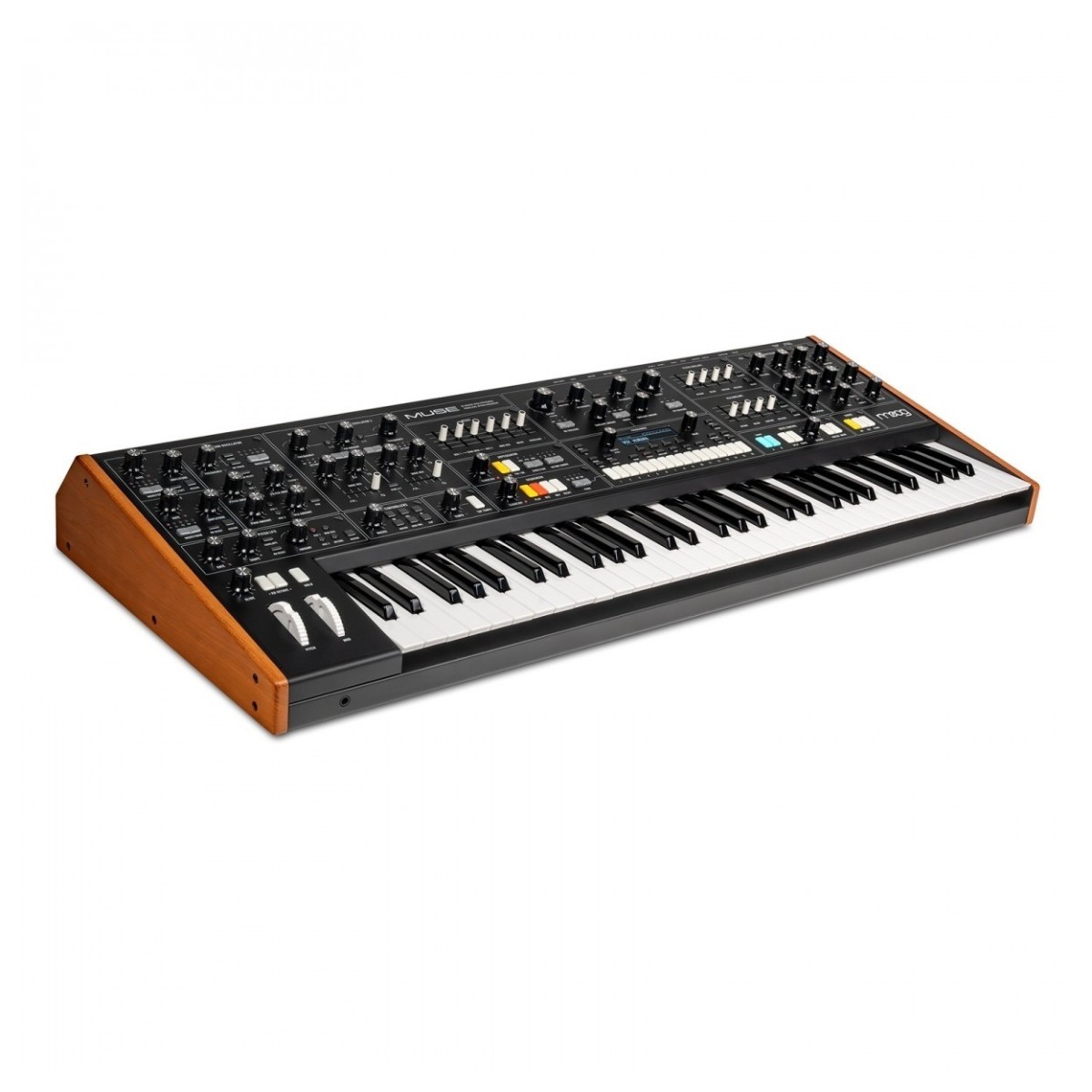
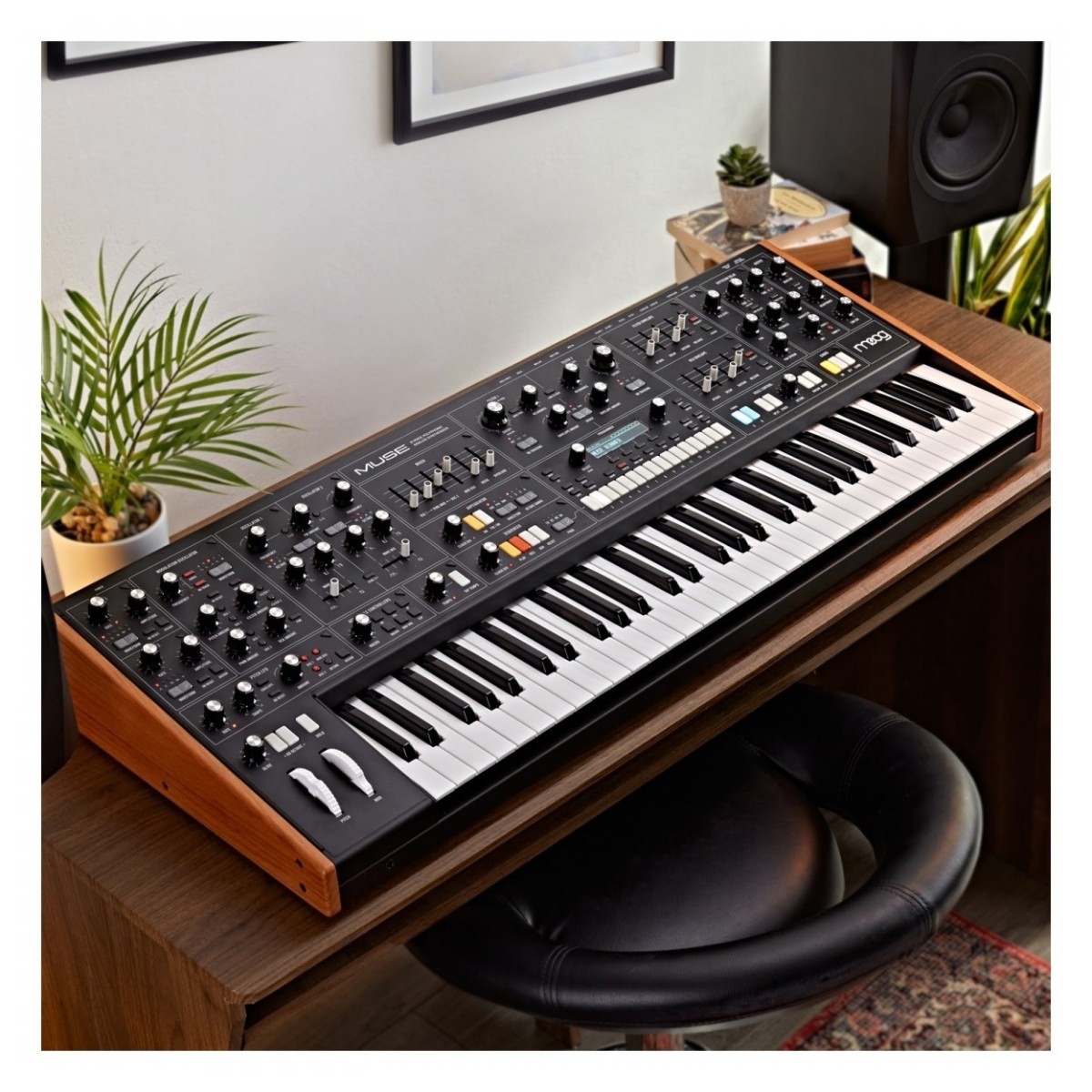
The Moog Muse 8-Voice Polyphonic Analog Synthesizer is perfect for musicians and producers seeking rich, dynamic soundscapes with vintage warmth. Featuring eight voices and bi-timbral capabilities, Muse provides a versatile platform for intricate compositions. Its intuitive knob-per-function control panel ensures a seamless, hands-on experience, allowing you to dive deep into sound design.
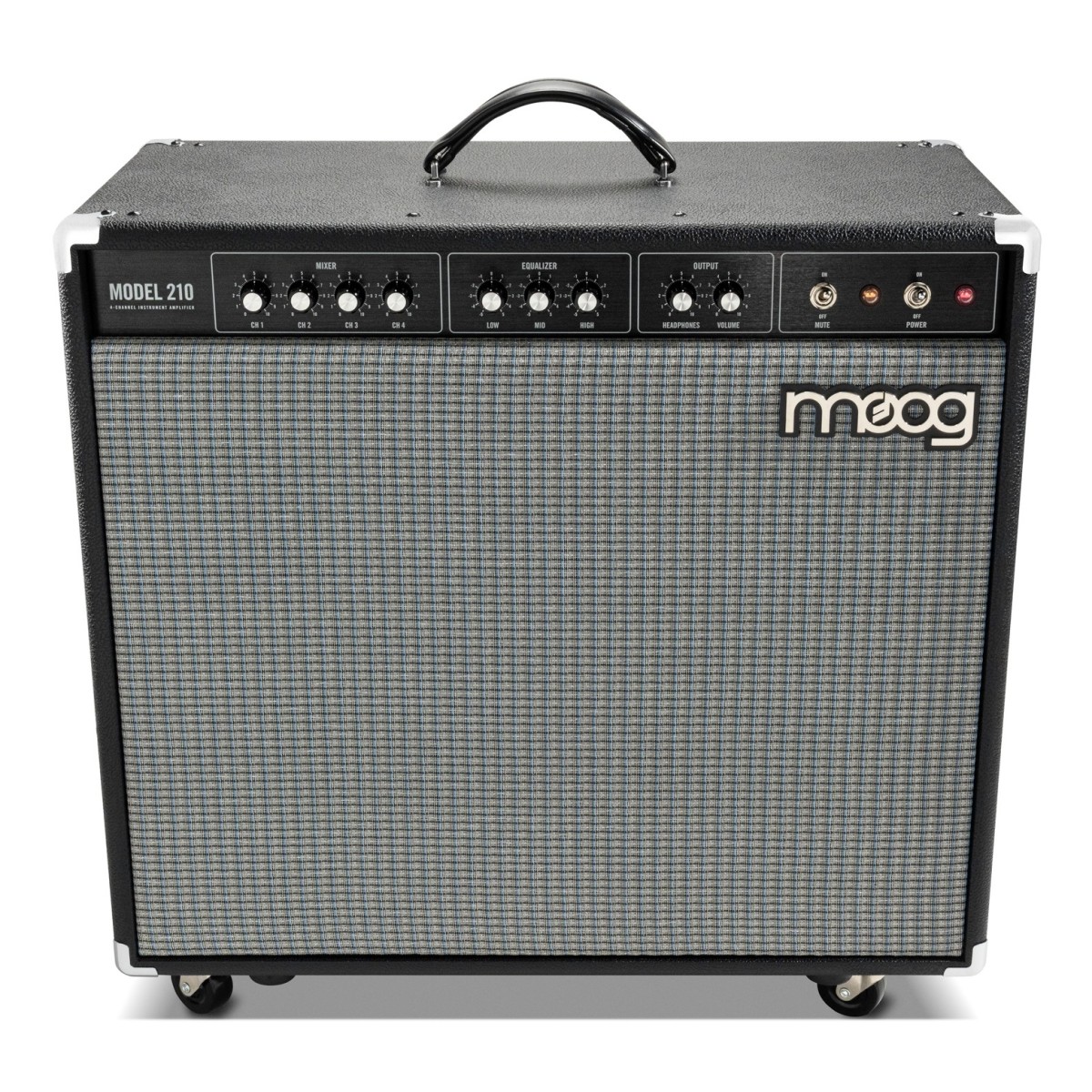
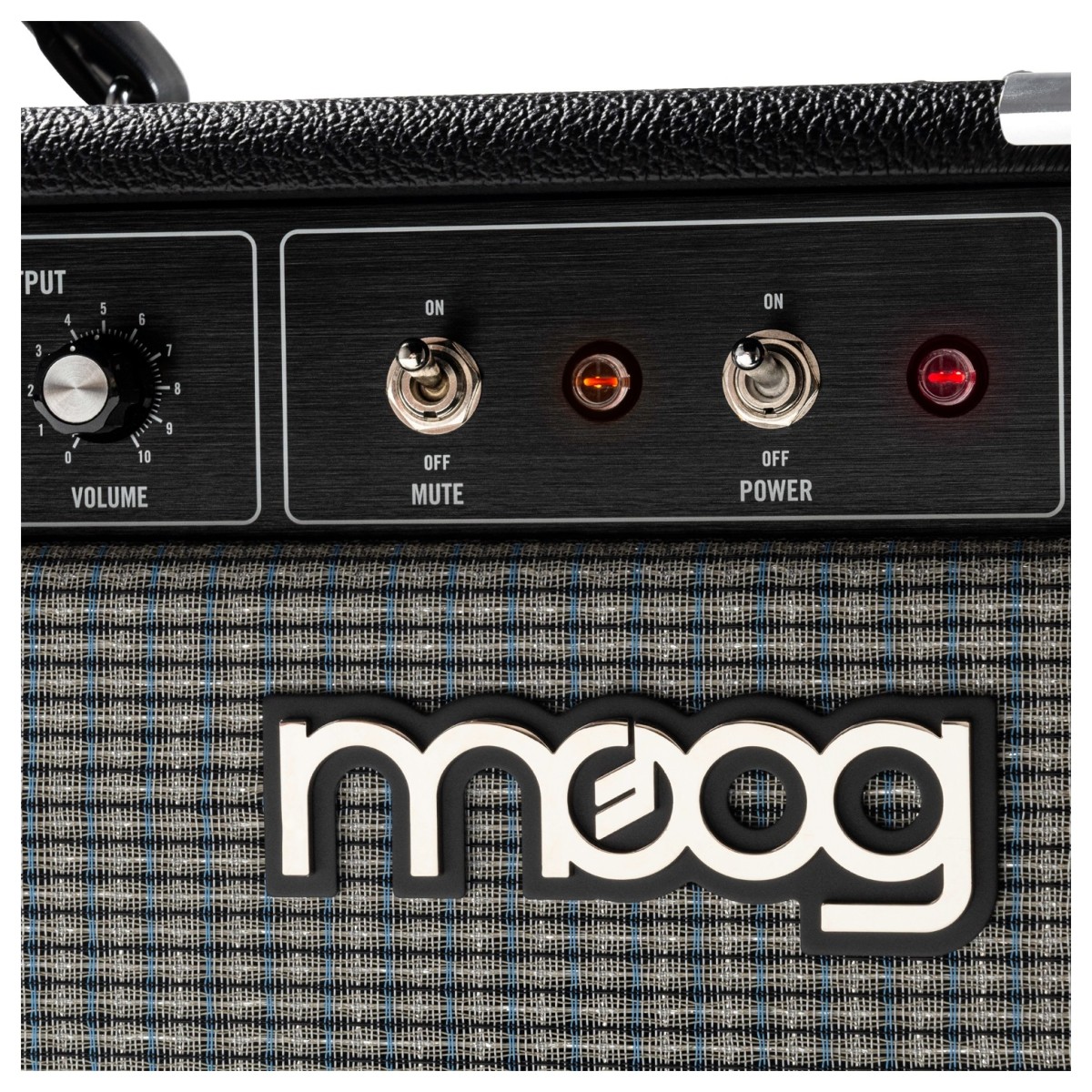
The Moog Model 210 2x10-inch, 4-Channel Instrument Amplifier is designed for keyboardists, electronic musicians, and performers needing accurate, powerful sound on stage. With 550W RMS of bi-amplified power, dual 10-inch woofers, and a 1-inch compression driver, it delivers detailed highs and extended bass response, making it particularly suited to synthesizers, electronic drums, and keyboards. The bundle also includes two high-quality TRS jack cables to connect everything together.
Product Ref: 399978
Full Description
View Full DescriptionMoog Muse 8-Voice Polyphonic Analog Synthesizer
Eight-voice polyphonic sound
The Moog Muse offers an eight-voice polyphonic sound engine, allowing you to create complex, layered textures and harmonies. Each voice is powered by vintage-inspired oscillators, delivering the warmth and character that Moog is renowned for. This depth of polyphony ensures that your compositions have the richness and fullness that modern music demands. With two selectable triangle/sawtooth mix oscillators and variable width pulse waves per voice, the Muse provides endless possibilities for crafting unique sounds.
Bi-timbral flexibility
Muse’s bi-timbral capability allows you to play two different patches simultaneously, providing a broader sonic palette. This feature is ideal for creating intricate, evolving soundscapes or for layering different tones to add depth to your music. Whether you’re performing live or working in the studio, this flexibility enhances your creative possibilities. The analog voltage-controlled modulation oscillator further expands your sonic horizons, offering selectable waveforms and powerful modulation routing options.
Intuitive controls
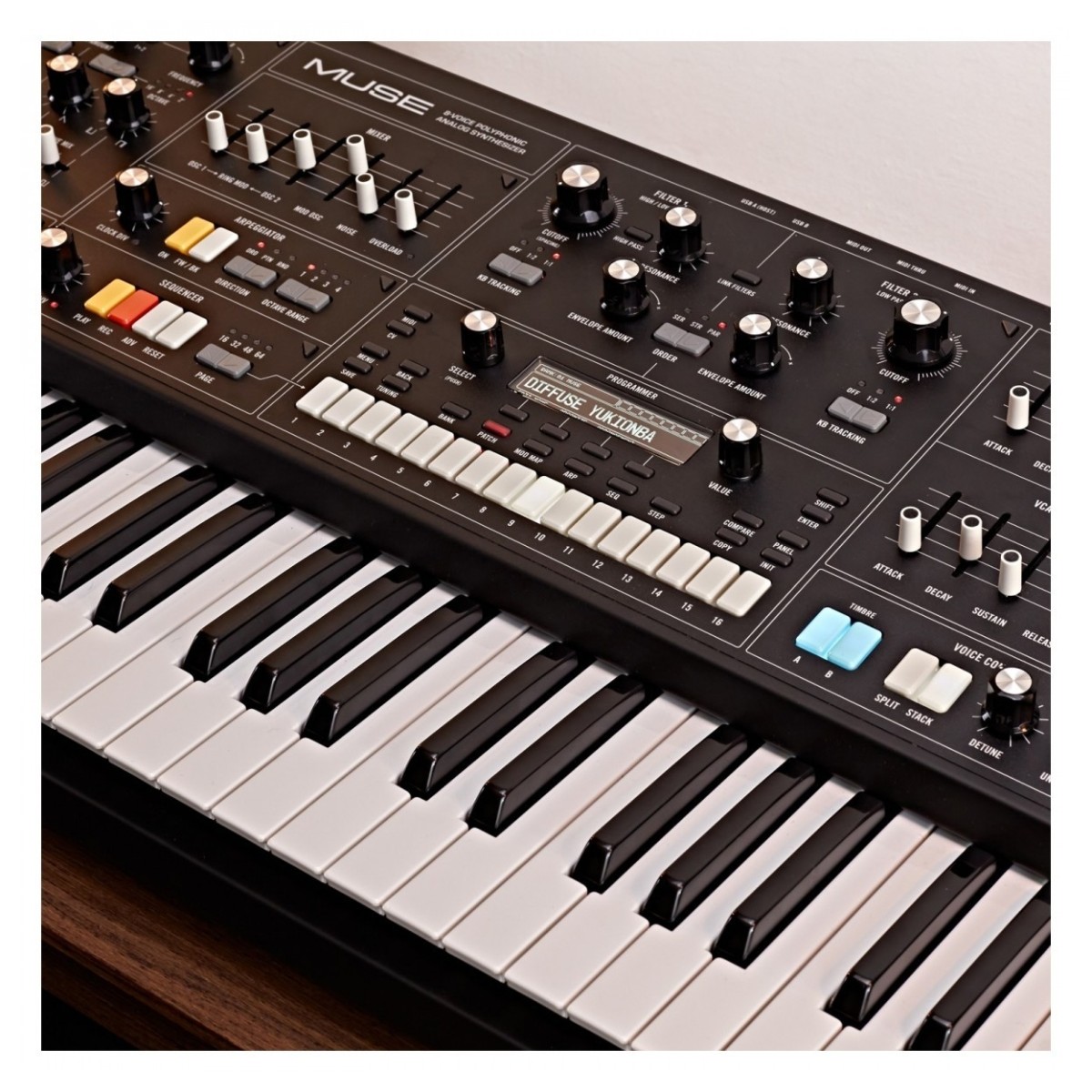
The knob-per-function control panel on Muse makes sound design straightforward and intuitive. Each module has its own dedicated menu, ensuring that all parameters are easily accessible. This hands-on approach allows for quick adjustments and real-time manipulation, making Muse an excellent choice for live performances and spontaneous creativity. With 44 knobs, 16 sliders, and 129 buttons, plus an OLED screen, you have immediate access to all the tools you need to shape your sound.
Advanced sequencing
Muse’s advanced sequencer is a playground for musical experimentation. With features like parameter recording, probabilistic functions, and microscopic editing, you can craft intricate sequences with ease. Each sequence can be modified on the fly, independent of the patch, allowing for dynamic changes and endless exploration. This level of control is perfect for artists looking to push the boundaries of their music. The powerful arpeggiator, sequencer, and chord memory functions offer exponential musical
Rich modulation options
The modulation capabilities of the Muse are truly impressive. The Modulation Oscillator provides a third oscillator or a powerful modulation driver, along with a dedicated pitch LFO, assignable envelopes, and triggered random generators. These are all routed via 16 modulation slots per voice per patch, giving you the ability to create highly complex and evolving sounds. This, combined with the analog voltage-controlled filters and amplifiers, ensures that your sound design possibilities are virtually limitless.
Performance and portability
Designed to be rugged and portable, the Moog Muse is perfect for the stage but equally at home in a modern studio. Its 61 full-size semi-weighted keys with velocity and aftertouch provide a responsive playing experience, while the comprehensive set of controllers, including pitch and modulation wheels, macro knob, and various pedal inputs, ensure that you have full expressive control over your performance. The unexpected diffusion delay effect adds a hypnotic stereo processing dimension, inspired by vintage digital rack delays, further enhancing the Muse’s versatility.
Moog Model 210 2x10-inch, 4-Channel Instrument Amplifier
Experience powerful sound with accurate reproduction
The Model 210 combines 550W RMS of bi-amplified power with a full-range, flat-response design to reproduce your instruments accurately. Its dual 10-inch woofers receive 510W of dedicated low-frequency amplification, while a 1-inch compression driver handles higher frequencies with 40W. The 2.5-way speaker design helps maintain an even frequency response, giving synthesizers, keyboards, and electronic drums the clarity they need.
With bass extension reaching 35Hz at -10dB, deep electronic sounds retain their weight and definition. All-analog amplification also delivers virtually zero perceptible latency, keeping your playing responsive and preserving subtle changes in dynamics and expression during performances.
Manage multiple instruments from one amplifier
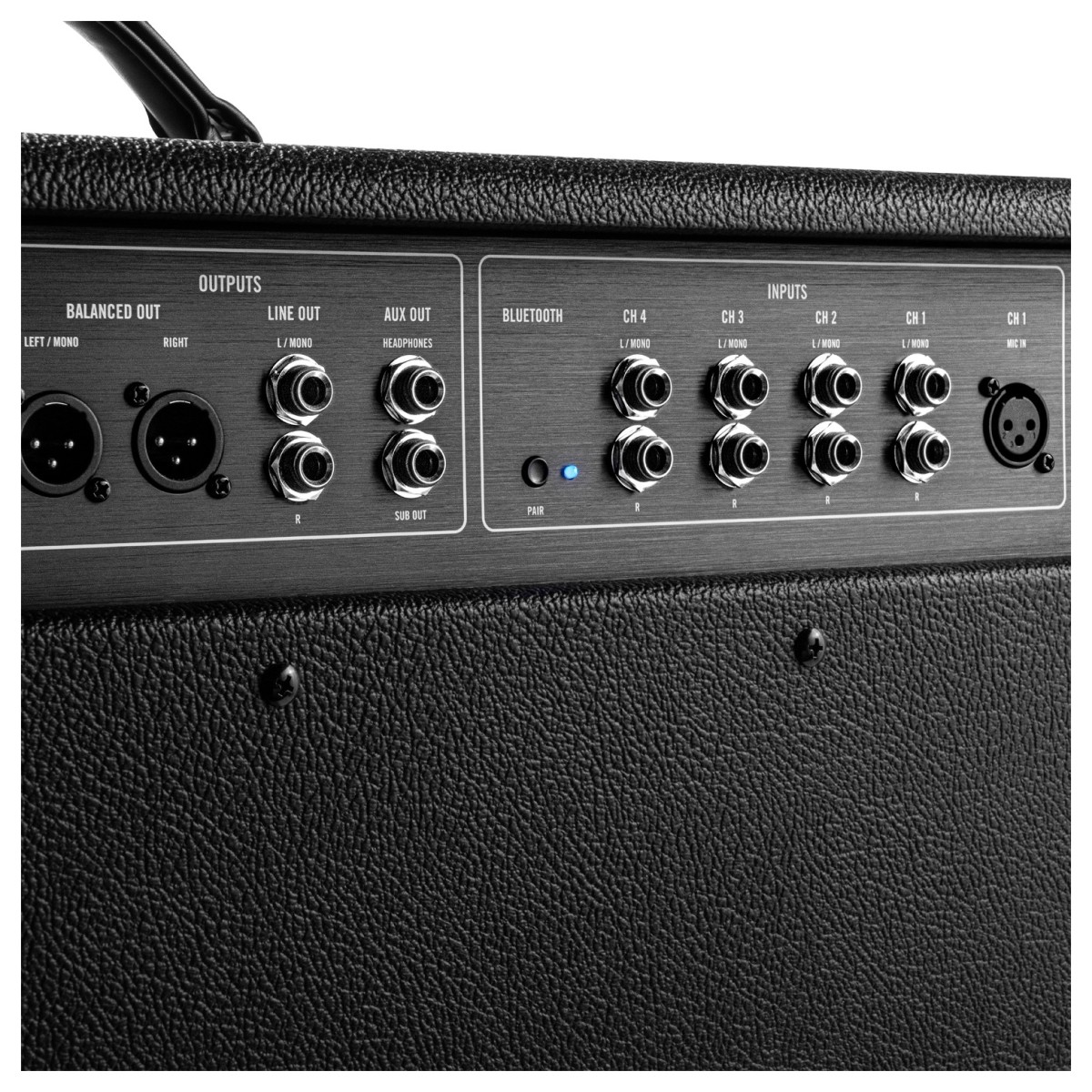
The integrated four-channel analog stereo mixer makes it easy to combine several instruments without adding a separate mixer to your setup. Each channel includes TRS line inputs with left mono connectivity, accommodating stereo keyboards, synthesizers, and other electronic instruments. Channel 1 also features an XLR microphone input with a dedicated preamp, giving you additional flexibility during rehearsals and performances.
For tonal adjustments, the three-band Baxandall master EQ lets you shape bass, midrange, and treble frequencies. This helps you adapt your overall sound to different rooms and stages while keeping your instrument settings unchanged. Everything stays accessible through the amplifier's integrated controls.
Connect and expand your performance setup
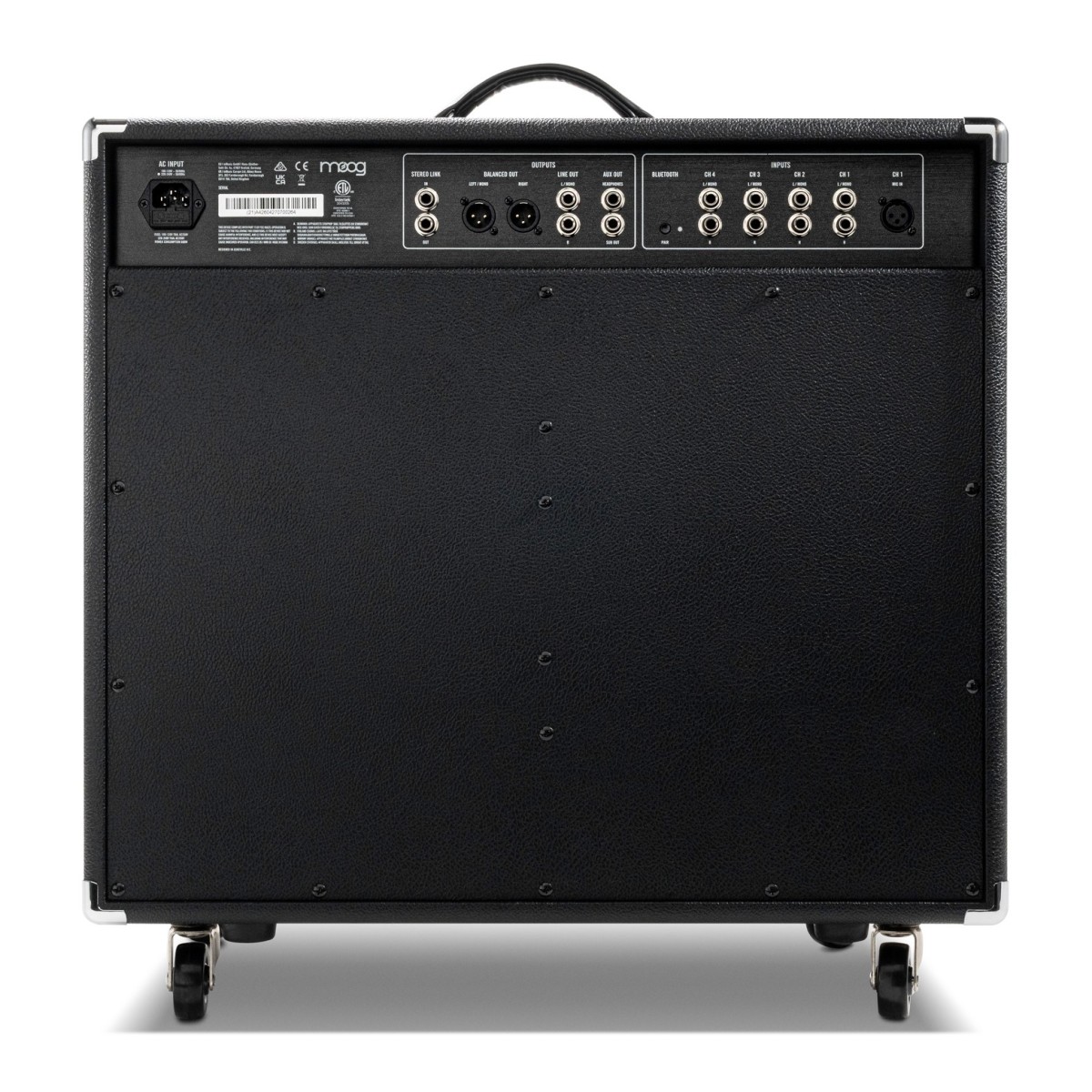
The Model 210 offers several connectivity options for rehearsals, recording, and live performances. Balanced stereo XLR and TRS outputs allow you to send audio directly to a PA system, making integration with larger sound setups straightforward. Stereo Link lets you connect two Model 210 amplifiers for true stereo operation, giving spacious keyboard patches and stereo effects room to develop.
Bluetooth 6.0 streaming provides wireless audio playback, making it convenient to incorporate backing tracks or other audio sources. For quieter sessions, the built-in headphone amplifier lets you monitor your instruments without relying on the main speakers. These connections make the Model 210 adaptable to different performance requirements.
Move between rehearsals and gigs with ease
Built for regular use, the Model 210 features a wooden enclosure wrapped in Moog's distinctive tolex covering, with protective metal corners for added durability. Its vintage-style grille cloth gives the amplifier a familiar appearance alongside synthesizers and keyboards. A top handle and two full-grip side handles provide convenient lifting options, while removable castors make repositioning easier when moving between performance spaces.
The amplifier uses a standard IEC power connection and supports 100-120V and 220-240V mains supplies at their respective frequencies. With its integrated mixer, powerful speaker system, and practical transport features, the Model 210 keeps your equipment manageable during setup and performance.
Features
Moog Muse 8-Voice Polyphonic Analog Synthesizer
- Eight-voice analog bi-timbral polyphonic synthesizer
- Intuitive and powerful instrument with a rich Moog history
- Designed for stage and studio use
- Knob-per-function panel for easy control
- Digital controls for flexible modulation and patch memory recall
- Advanced sequencing with parameter recording and probabilistic functions
- Rich analog synthesizer architecture for evolving sound
- Vintage discrete modular-lineage oscillators and saturating mixer
- Dual classic transistor ladder filters and discrete stereo amplifiers
- Performative controls and intuitive layout
- Powerful arpeggiator, sequencer, and chord memory
- Diffusion delay effect for hypnotic stereo processing
- Modulation Oscillator with additional Pitch LFO and assignable envelopes
- 61 full-size semi-weighted keys with Velocity and Aftertouch
- Comprehensive panel controls with 44 knobs, 16 sliders, and 129 buttons
- Analog voltage-controlled oscillators with selectable waveforms and FM routing
- Analog ring modulator between Oscillators 1 and 2
- Analog voltage-controlled modulation oscillator with multiple routing options
- Independent level control for oscillators and noise generator
- Moog transistor ladder filters with highpass/lowpass modes
- Analog voltage-controlled mixer and amplifier
- Multiple envelopes with variable curves and looping options
- Volume and pan control per timbre
Moog Model 210 2x10-inch, 4-Channel Instrument Amplifier
- Professional 4-channel instrument amplifier designed for synthesizers, keyboards, electronic drums, and modeling systems
- Powerful 550W RMS bi-amplified system delivers 510W of low-frequency power and 40W for high frequencies
- 1100W peak output provides ample headroom for demanding rehearsals and live performances
- All-analog amplification ensures accurate sound reproduction with virtually imperceptible latency
- Full-range, flat-response design preserves the natural character and detail of connected instruments
- Dual 10-inch woofers produce deep, controlled bass with impressive low-frequency impact
- Dedicated 1-inch compression driver delivers clear, detailed high frequencies through a conical horn
- Advanced 2.5-way speaker architecture maintains smooth and balanced frequency reproduction
- Extended frequency response reaches from 35Hz to 23kHz for powerful bass and articulate highs
- Wide 100-degree horizontal and vertical coverage provides consistent sound dispersion across performance spaces
- Integrated 4-channel analog stereo mixer allows multiple instruments to be connected and controlled simultaneously
- Channel 1 features a dedicated XLR microphone preamp for additional input flexibility
- Three-band Baxandall master EQ enables precise tonal adjustments to suit different instruments and venues
- Bluetooth 6.0 wireless connectivity supports convenient audio streaming and backing track playback
- Balanced stereo XLR and TRS outputs provide professional connectivity to PA systems and mixing consoles
- Stereo Link functionality allows two Model 210 amplifiers to operate as a true stereo amplification system
- Built-in headphone amplifier enables private monitoring and quiet practice sessions
- Professional microphone and line inputs accommodate signals up to +18dBu
- Standard IEC power connection supports reliable operation with compatible mains supplies
- Dual-voltage compatibility accommodates 100–120V and 220–240V electrical systems
- Robust wooden cabinet features durable Moog tolex covering and reinforced metal corners
- Vintage-inspired grille cloth delivers a distinctive appearance that complements classic Moog instruments
- Convenient top carrying handle and full-grip side handles make lifting and positioning easier
- Removable casters simplify transportation between rehearsal spaces, studios, and stages
Specifications
Moog Muse 8-Voice Polyphonic Analog Synthesizer
- Synthesizer Type: Polyphonic, Bi-timbral Analog Synthesizer
- Sound Engine: Analog (Digital effect may be bypassed to maintain 100 analog signal path)
- Polyphony: 8 Voices
- Keybed: 61 Full-size Semi-weighted Keys With Velocity And Aftertouch
- Controllers: Pitch Wheel, Modulation Wheel, Macro Knob, Keyboard Octave Switch, Hold Switch, Sustain Pedal Input, Expression Pedal Input – All Pedal Functions Are Assignable
- Panel Controls: 44 Knobs, 16 Sliders, 129 Buttons – OLED Screen
- Analog Voltage-Controlled Oscillators: (x2) Selectable Triangle/Sawtooth Mix, Variable Width Pulse Wave, Octave (16’, 8’, 4’, 2’), Frequency (+/- 7 Semitones), Wave Mix (Blends Triangle/Sawtooth With Variable Pulse Wave), FM Routing And Amount, Hard Sync
- Analog Ring Modulator: Ring Modulation Between Oscillators 1 And 2
- Analog Voltage-Controlled Modulation Oscillator: Selectable Waveform (Sine, Sawtooth, Reverse Sawtooth, Square, Noise), Audio Range Toggle Switch, Keyboard Tracking, Keyboard Reset, Unipolar Switch, Pitch Modulation Routing And Amount, Filter Modulation Routing And Amount, Pulse Width Modulation Routing And Amount, VCA Modulation Amount, Panning Switch
- Analog Noise Generator:
- Analog Voltage-Controlled Mixer: Independent Level Control For OSC 1, OSC 2, RING, MOD OSC, And NOISE. Overall OVERLOAD Control
- Analog Voltage-Controlled Filters: (x2) Moog Transistor Ladder Filters (1 With Highpass/Lowpass Modes), Cutoff Frequency, Resonance, KB Tracking Amount, Envelope Amount, Linked Operation, Routing (Series, Parallel, Stereo)
- Envelopes: (x2) Attack, Decay, Sustain, Release, Variable Curves Per Stage, Multi-trig, Loop, Velocity
- Analog Voltage-Controlled Amplifier: Volume Per Timbre, Pan Position Per Timbre, Pan Spread Per Timbre
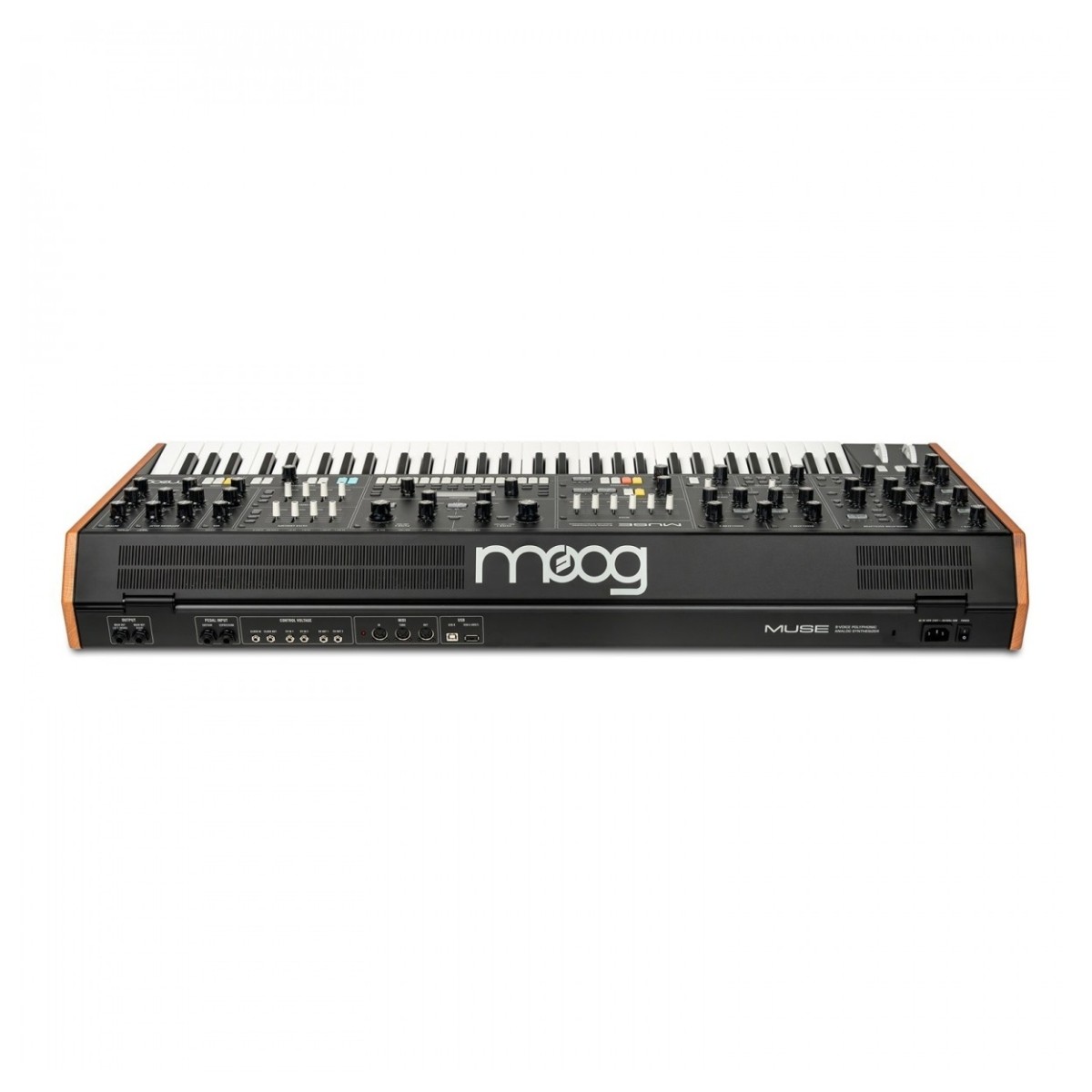
- Audio Outputs: Main Left, Main Right (¼" TRS)
- Headphones: Stereo ¼" (Located On The Front Edge Of The Left Hand Controller)
- Pedal Inputs: Sustain, Expression (¼" TRS; Configurable Through Mod Map Or For Use As ¼" TS CV Inputs)
- Control Voltage Inputs: CV IN 1, CV IN 2 (1/8” TS)
- Control Voltage Outputs: CV OUT 1, CV OUT 2 (1/8” TS)
- Analog Clock Input: CLOCK IN (1/8” TS)
- Analog Clock Output: CLOCK OUT (1/8” TS)
- MIDI: 5 Pin DIN MIDI IN, OUT, THRU; MIDI Over USB
- USB: USB-A Host Port For System And Data Backup, USB-B Port For Connection With Computers, Class-Compliant Peripherals
- Weight: 32 lbs (14.55 kg)
- Dimensions: Imperial: 39” W, 17” D, 4.5” H. Metric: 99cm W, 42cm D, 11cm H.
- Product Code: MUSE
Moog Model 210 2x10-inch, 4-Channel Instrument Amplifier
- Mic inputs (CH 1):
- Connector: XLR
- Maximum input level: +18 dBu
- Frequency response: 20 Hz–20 kHz (+/- 3 dB)
- Input impedance: 600 Ohms
- Line inputs (CH 1–4):
- Connector: 2 x TRS input connectors (left mono)
- Maximum input level: +18 dBu
- Frequency response: 20 Hz–20 kHz (+/- 3 dB)
- Input impedance: Line 22K Ohms
- Main outputs:
- Connector: 2 x XLR + 2 x TRS
- Output level (for 0.5% THD): Nominal +4 dBu
- Input impedance (unbalanced): 100 Ohms
- Bluetooth:
- Specification: 6.0
- Profiles: A2DP, AVRCP
- General:
- Peak system / RMS power: 1100W peak / 550W RMS (510W LF / 40W HF bi-amplified)
- LF driver: Dual 10-inch
- HF driver: 1-inch compression driver
- Coverage (H x V): 100 x 100
- Frequency response (-3 dB / -10 dB): 38 Hz–20 kHz / 35 Hz–23 kHz
- AC power input: 100–120VAC / 60Hz; 220–240VAC / 50Hz
- Power connector: IEC
- Enclosure: Tolex-wrapped wood with protective metal corners
- Handles: 2 x full-grip side handles and removable casters
- Sub dimensions (HWD): 22.0 x 24.2 x 13.3 inches / 56.0 x 61.5 x 33.7 cm
- Weight: 69.89 lbs / 31.7 kg
- Product code: MODEL-210
Your order may contain items that use a 240V UK plug or a 220V EU plug
Any electrical items in your order may have been designed to work with a 240V circuit, using a United Kingdom G type plug connection or a 220V circuit, using an EU plug connection. An adapter or transformer may be required for these items to work properly and safely in your country. Some items work with a range of voltages, or have a switchable voltage control built in. Please refer to the specific product details for further information.
Recommended extras
| Reviews of our service
View all