



Some synths do more than just make sounds. They can be incredibly influential in defining genres and eras in music history – the ’80s being one of the most notable examples.
So, which synths are we talking about, exactly? In this article, we’re taking a look at the most iconic analog synths of all time. From the gear used by the likes of Depeche Mode, New Order, and Pink Floyd to the equipment on some of the best cinematic soundtracks, these instruments have earned legendary status.
Each synth was assessed for its sound, cultural impact, and long-lasting relevance – essentially, how it has shaped electronic music.

In a hurry?
- Moog Minimoog Model D – This synth became iconic by bringing powerful analog sound into a compact, performance-ready design that musicians could easily understand and play.
- Dave Smith Prophet 5 – Its legacy comes from being the first fully programmable polyphonic analog synth, making complex sounds reliable and repeatable for the first time.
- Yamaha CS-80 – The CS-80’s reputation was built on expressive control, allowing players to shape tone, pitch, and dynamics directly through touch and performance.
The most iconic analog synths
1. Moog Minimoog Model D
Released in 1970, the Minimoog Model D is often seen as the synth that brought analog synthesis to the masses.
Before it arrived, synths were large modular systems that stayed firmly in studios. The Model D changed that by packing powerful analog sound into a compact, keyboard-based design that was easy to understand and quick to play.
Its layout was clear. With no patch cables and a signal path that encouraged hands-on tweaking, the synth appealed to engineers and musicians alike.
Sound-wise, it set a new benchmark. Its three oscillators and iconic low-pass ladder filter delivered thick basses and smooth leads that cut through mixes with ease. It quickly became a favourite in the studio. Musicians like Herbie Hancock, Kraftwerk, and Rick Wakeman used it to shape everything from funk and prog rock to early electronic and synth-pop records.
But the Minimoog’s influence goes far beyond individual tracks. It has also defined what a performance synth should be, and its sound remains a reference point for analog warmth.
If you’re looking for a deeper dive into the history and impact of the Minimoog, read the Minimoog Book – it includes exclusive interviews with legendary synth users as well as detailed photography of this iconic synth.

2. Dave Smith Prophet-5
Few synths have had as big an impact on electronic music as the Dave Smith Prophet-5.
Introduced in 1978, it broke new ground by combining true analog polyphony with patch memory. For the first time, musicians could store sounds and recall them instantly – this was far more practical for live shows, in particular, as well as fast-paced studio work.
The Prophet-5 offered five voices, each with its own oscillators and filters. This opened the door to the kind of expressive tones that simply weren’t possible on many synths of the time.
Its warm, clear, and slightly gritty sound became a fixture throughout late ’70s and ’80s music, sitting perfectly in pop, rock, and electronic mixes.
Artists and producers were quick to adopt it. From The Cars to Kraftwerk, it was used for productions in a range of genres. And it’s still going strong today.
Its influence has stood the test of time, too. The Prophet-5 helped define modern synth design; features that feel standard now, like patch recall and digitally controlled stability, were groundbreaking back then.
3. Yamaha CS-80
The Yamaha CS-80 is one of those synths that feels more like a performance instrument than a keyboard. When it arrived in the late 1970s, it was a bold statement: true 8-voice polyphony, dual layers per note, and expressive controls that went far beyond the norm.
Its keyboard responded to touch and pressure, while a ribbon controller added dynamic pitch bends and timbral sweeps that could feel almost vocal in quality. Sound-wise, the CS-80 was huge. It delivered lush pads and bold brass-style tones that moved and breathed as you played, and each voice had dual layers for a depth that was unusual in synths at the time.
It wasn’t an easy synth to own. The CS-80 was heavy, expensive, and notoriously difficult to maintain. Still, the instrument became inseparable from Vangelis, whose use of the CS-80 defined the sweeping, cinematic sound of films like Blade Runner and Chariots of Fire. Those recordings cemented its reputation as a master of atmosphere and emotion.
If you’re looking to recreate that classic CS-80 magic, Arturia’s CS-80 V is a virtual instrument plugin that faithfully recreates a CS-80-style synthesizer with a beautiful GUI (graphical user interface) resembling the original.

Creative Commons License by Pete Brown
4. Oberheim OB-Xa
Big, glossy chords. Instantly recognisable analog warmth. The Oberheim OB-XA really made its mark when it was introduced in 1981. Synth acts and bands like Van Halen used it to bring analog power into arena-ready tracks.
It elevated earlier Oberheim designs and pushed polyphonic synthesis firmly into the spotlight. With two oscillators per voice and a naturally wide stereo feel, it delivered a sound that felt rich and confident without needing heavy processing. There were bold pads, punchy brass sounds, and a smooth tone that sat proudly at the front of a mix. And even the most subtle tweaks could dramatically change its character.
Despite its size, the OB-XA was designed with performance in mind, using patch memory for more practical live work and an angled control panel to keep everything within easy reach on stage.
The OB-XA’s influence still lingers. Its sound has become a reference point for modern polysynths chasing that classic Oberheim warmth. For example, the new OB-X8 Analog Synthesizer incorporates three classic voices from the OB-X, OB-Xa and OB-8, showcasing the huge sonic power that only Oberheim can create.
5. Roland Juno-106
There’s a reason the Roland Juno-106 turned up everywhere in the ’80s and beyond – it struck a perfect balance between simplicity and character.
The Juno-106 entered the scene in 1984, taking Roland’s earlier Juno design and making it even more accessible. With six voices of polyphony and onboard chorus, it gave players lush pads, punchy basses, and creamy leads with minimal fuss. Unlike some synths that demanded hours of tweaking, the Juno-106 sounded great straight out of the box.
One of its defining features was the digitally controlled oscillator (DCO), which kept tuning stable while retaining analog warmth. That reliability made it a studio favourite, especially in pop, synth-pop, and dance music.
Its rich, chorused tones quickly became ubiquitous, and you can hear its unmistakable sound on countless records from the ’80s, such as many New Order and Depeche Mode tracks – its onboard arpeggiator and ability to sync with other gear also made it a creative hub in many setups. The synth later found new life in house, techno, and ambient music as producers rediscovered its charm.
The Roland Juno-X continues the legacy of the iconic Juno range, incorporating sounds from the Juno-106 and Juno-6 models, as well as Roland’s cutting-edge Zen-Core synthesis engine.

Creative Commons License by Allert Aalders
6. Korg MS-20
Raw, gritty, and unapologetically hands-on, the Korg MS-20 quickly earned a reputation as a synth with attitude. And by that, we mean it encouraged players – electronic pioneers, experimental producers, and early techno artists – to experiment creatively and rebelliously.
The semi-modular patch bay allowed players to reroute signals and break the rules, while still keeping a clear signal path for more straightforward sounds. This balance made it inviting for newcomers and endlessly interesting for experienced users.
Sound-wise, its filters were sharp and aggressive, delivering snarling basslines, biting leads, and unstable textures that felt alive under your fingers. This edge helped it carve out a space that smoother analog synths simply couldn’t fill. Its tones cut through dense mixes and club systems with ease.
Released in 1978, it also introduced features that were ahead of their time. External signal processing allowed drums, vocals, and guitars to be pushed through its filters, turning the synth into a creative sound-shaping tool.
That forward-thinking design has kept it relevant. Reissues and modern versions (such as the Korg MS-20 Mini) have stayed true to the original, proving the MS-20’s raw personality still inspires today.
7. ARP 2600
The ARP 2600 is often described as a playground for sound designers, and it earned that reputation early on. The ARP 2600 first appeared in 1971, at a time when synthesis was still finding its footing. Its influence helped shape how people understood sound design, not just melody and harmony.
Rather than forcing musicians to choose between a keyboard synth or a full modular system, it offered something in between. The layout allowed you to play it straight away, but patching cables unlocked far deeper control. You could use it for structured compositions and open-ended experimentation.
Its sound palette was broad and distinctive. With multiple oscillators, flexible filtering, and a responsive modulation section, the 2600 could move from warm analog tones to sharp, otherworldly effects in seconds. And even with the smallest adjustments, you could get completely unexpected results. With this synth, people had something experimental, not perfection – great for electronic music and progressive rock.
Its ability to create unusual textures also made it popular in film and television.
If you’re an electronic music producer wanting to capture the unique character of the ARP 2600, the Cherry Audio CA-2600 virtual instrument plugin includes 300 patches inspired by the original hardware.

Creative Commons License by Ville Hyvönen
8. Roland SH-101
The Roland SH-101 proves that great things can come in small packages.
When it was launched in 1982, it was designed as a simple, affordable instrument with one voice. Its streamlined layout meant there were no complicated menus or hidden functions. Everything you needed was visible and within reach, so you could dial in the sounds you wanted without hesitation.
Its sound was raw and punchy, with a single oscillator that could be shaped through filter, envelope, and modulation controls. That straightforward design didn’t limit creativity. If anything, it sharpened it. Producers found ways to make the SH-101 sing and growl and add personality to their tracks.
Part of its appeal, though, was how it fitted into grooves. Its sequencer and Hold functions made pattern-based music feel alive, and its compact size made it easy to slip into live setups or corner studios.
Even though early reception was modest, the SH-101 gained cult status as electronic genres evolved. Techno and house producers in the late ’80s and ’90s, such as Aphex Twin, made great use of its tight low end and expressive leads.
The SH-101 continues to live on in the form of the Roland SH-01A Sound Module (a compact hardware recreation of the original) and the Roland Aira Compact S-1 Tweak Synth (a portable polysynth inspired by the SH-101).
9. Moog System 55
Massive, tactile, and unmistakably analog, the Moog System 55 is the kind of instrument that defined what a synthesiser could be.
Unrolled from a full rack of modules, it gave musicians deep control over every part of the sound. It was essentially a toolkit for building tones from the ground up. Players could sculpt their sound like a sculptor shapes clay.
Making its mark in the early 1970s, it was aimed at studios and serious sound designers rather than casual players. Its scale reflected ambition: you weren’t just making simple leads or basses, you were creating evolving textures and complex patches that could shift and breathe over time.
The System 55 found its way into influential studios where experimental and progressive music was being made. Pioneering artists and producers working on avant-garde pieces, film scores, or cutting-edge electronic compositions used it to explore sound in ways that few instruments allowed. The sheer size and hands-on nature made it ideal for deeply creative and detailed sessions.
If you’re looking for a modern-day counterpart, Behringer have created a System-55-style Modular Synthesizer comprised of 38 separate modules – faithfully recreating one of the most comprehensive analog synths out there.

Creative Commons License by Kimi95
10. ARP Odyssey
The ARP Odyssey carved out a space of its own in analog synth history. It arrived in 1972 and quickly found fans across rock, funk, and electronic music, with artists like Herbie Hancock and later electronic producers using it on stage and in the studio.
Rather focusing on size or complexity, the Odyssey was designed for players who needed immediacy and the ability to shape sound in real time. The layout encouraged constant interaction, with sliders and switches that invited movement while playing.
One of its defining traits was duophonic play. Being able to trigger two notes at once gave basslines extra weight and lead lines more movement, which helped it stand apart from the many monophonic synths of the era. The sound itself could be smooth or abrasive, depending on how far you pushed it.
Creative tools such as ring modulation and sample and hold expanded the synth’s range well beyond traditional keyboard sounds. Nowadays, the Behringer Odyssey is the closest thing you’ll get to the hardware, while the Cherry Audio ODC 2800 recreates all three classic Odyssey models.
11. Roland Jupiter-8
When you think of classic polysynth powerhouses, the Roland Jupiter-8 often tops the list.
Roland launched it in 1981, bringing eight voices of rich analog sound with a level of control that felt fresh and musical. Each voice could stack two oscillators, giving lush pads, warm chords, and brassy leads fantastic depth.
One of the Jupiter-8’s best features, though, was its ability to split or layer sounds across the keyboard. Players could hold shimmering strings on one side while a bold lead soared on the other. That flexibility made it a favourite for live performance as much as studio work.
The Jupiter-8’s sound shaped many records throughout the early ’80s. Synth-heavy acts and producers used its vibrant tones for pop, new wave, and electronic tracks. Its presence added richness and clarity without sounding sharp or brittle. Plus, it was reliable, giving it the edge over temperamental synths of the era. It could stay in tune for long periods of time and deliver consistent results session after session.
Even now, its combination of wide sonic range and expressive control keeps it revered. For many players, the Jupiter-8 still represents the peak of analog polysynth design and continues to inspire modern instruments that chase its signature voice.
Continuing the Jupiter series, the Roland Jupiter-Xm uses a cutting-edge synthesis engine to reproduce the tone and character of the Jupiter-8, Juno-10, SH-101, and many more.
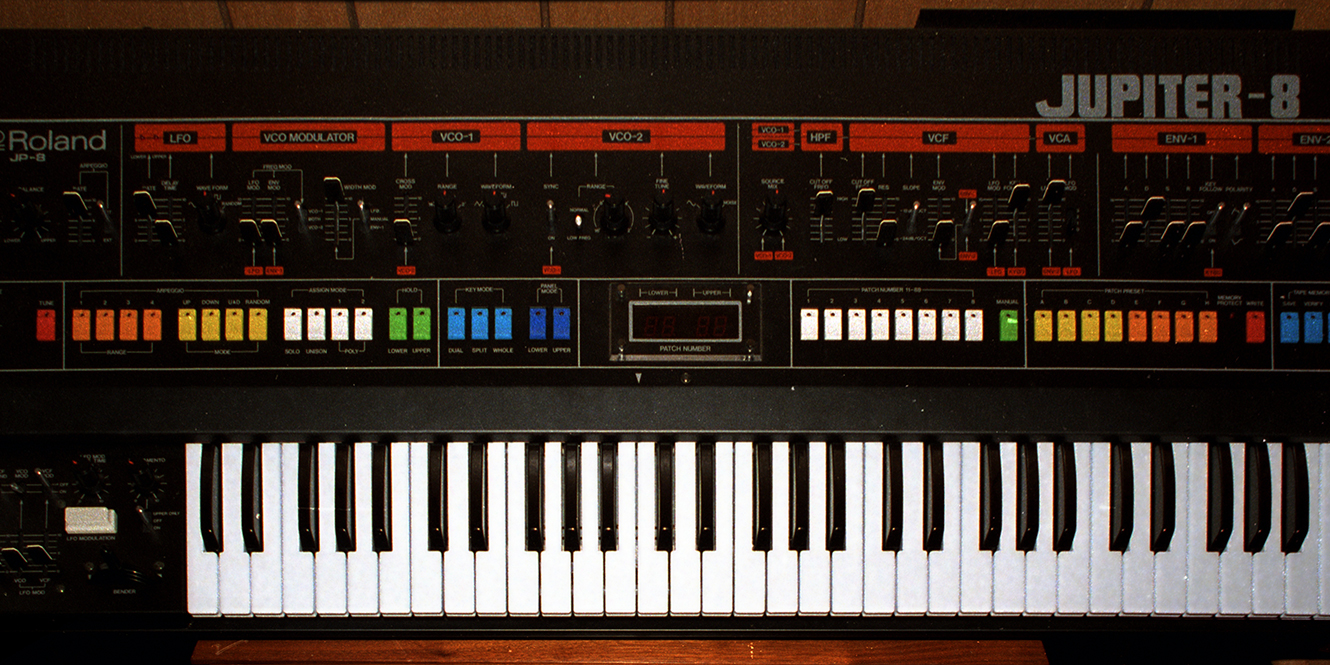
Creative Commons License by Ed Uthman
12. EMS Synthi
The EMS Synthi never tried to behave like a traditional keyboard, and that is exactly why it became so influential.
Designed in the late 1960s and released in 1969, this compact British synth approached sound creation from a completely different angle. Instead of patch cables, it used a pin-based matrix that encouraged experimentation. Routing signals felt more like problem-solving than programming, which suited musicians who enjoyed discovery over predictability.
Its sound reflected that mindset. The Synthi could drift between soft ambience, pulsing sequences, and unstable electronic noise with very little effort. Filters and oscillators interacted in unusual ways, often producing results that felt organic and slightly unruly.
One of its most famous moments came with Pink Floyd. The driving sequence on “On the Run” from The Dark Side of the Moon was created using the Synthi, helping define the tense, futuristic feel of the track. That single use cemented its place in electronic music history.
Brian Eno was another key advocate, using the Synthi to explore texture and atmosphere rather than melody. His work showed how synthesis could shape emotion and space.
For modern-day users, the Arturia Synthi V is a virtual instrument plugin version based on the design of the original Synthi, with a 19×16 modulation pin matrix, blended with modern-day features to push its sound design capabilities even further.
13. Roland TB-303
At first glance, the Roland TB-303 looked like a practical tool with a very specific job. Roland released it in 1981 as the TB-303 Bass Line, designed to act as a substitute bass player for solo musicians.
It came with a simple sequencer and a handful of controls, but it struggled to sound anything like a real bass guitar. As a result, it was quietly discontinued and sold cheaply for years.
Its story changed when electronic producers started using it in unintended ways. By leaning into its quirks, they uncovered a liquid, bubbling sound that felt alive. This was not subtle bass support. It was expressive, hypnotic, and impossible to ignore.
That sound became the backbone of acid house. Producers in Chicago, including Phuture and DJ Pierre, used the 303 to create tracks that reshaped club music and spread quickly across the UK and Europe. Its squelching sequences became a defining feature of late ’80s rave culture.
The 303 was never flexible in a traditional sense, but that limitation became its strength. Every tweak felt dramatic, and small changes could completely transform a pattern.
Today, the Roland 303 is iconic because it represents creative misuse at its best. It proved that a misunderstood machine could spark an entire genre, simply by being pushed beyond its original purpose.
The Roland TB-03 Bass Line Synth Module pushes the TB-303 forward, providing a realistic recreation of the original with a built-in 24-bit/96 Khz USB audio interface.
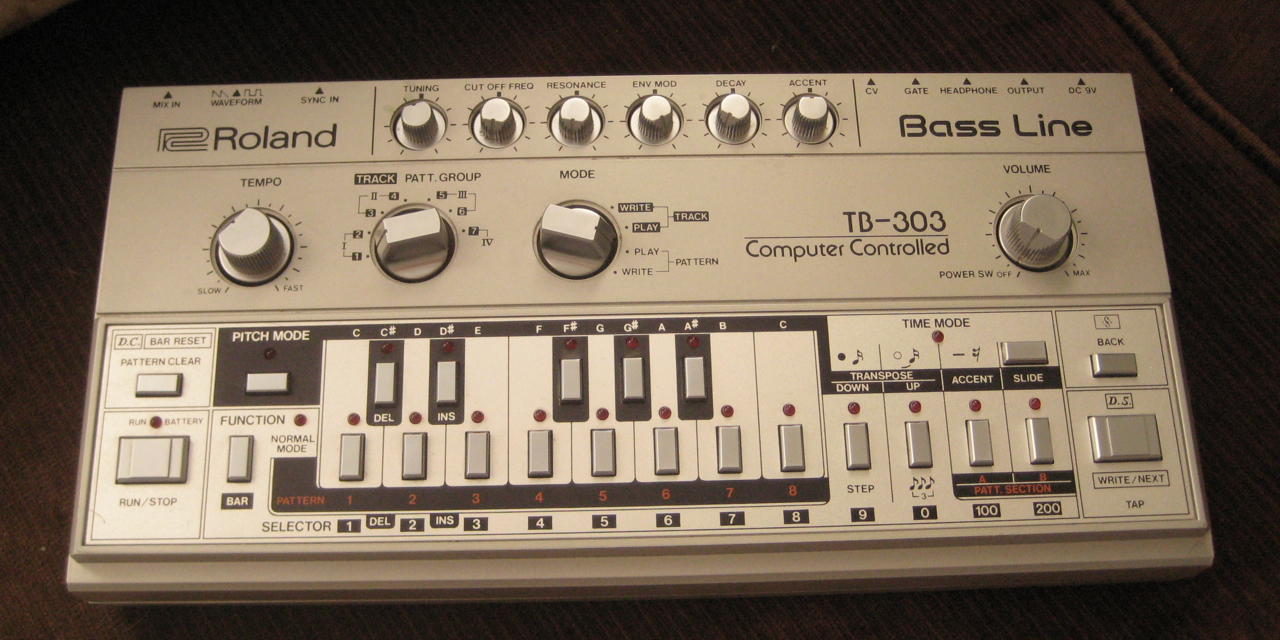
Creative Commons License by eternal jamzzzz
FAQs
What is an analog synthesizer?
An analog synthesizer is an electronic instrument that generates sound using analog circuits and voltage-controlled components. These synths shape sound through waveforms, filters, and envelopes without digital processing. Their warm, rich tones are prized by musicians and producers.
Is an analog synth worth it?
An analog synth is worth it for those seeking authentic sound quality, hands-on control, and classic character. They deliver a tactile experience and uniquely warm tones that digital gear often emulates but rarely replicates. Analog synths are especially valued in studio and live settings.
What are some famous analog synthesizers?
Some famous analog synthesizers include the Minimoog Model D, Roland Juno-106, and ARP 2600. These iconic synths helped shape decades of music, from classic rock to modern electronic genres. Their distinct sound and design continue to inspire producers worldwide.
Final thoughts
The most iconic analogue synths have earned their status through sound, design, and influence. From massive modular systems and expressive polysynths to stripped-back bass machines and experimental tools, each synth on this list shaped electronic music in its own way. Some became studio cornerstones, others defined entire genres, and a few found greatness through happy accidents.
What stands out is the variety. There is no single formula for an iconic synth, just instruments that connected with musicians and inspired creativity.




0 Comments