

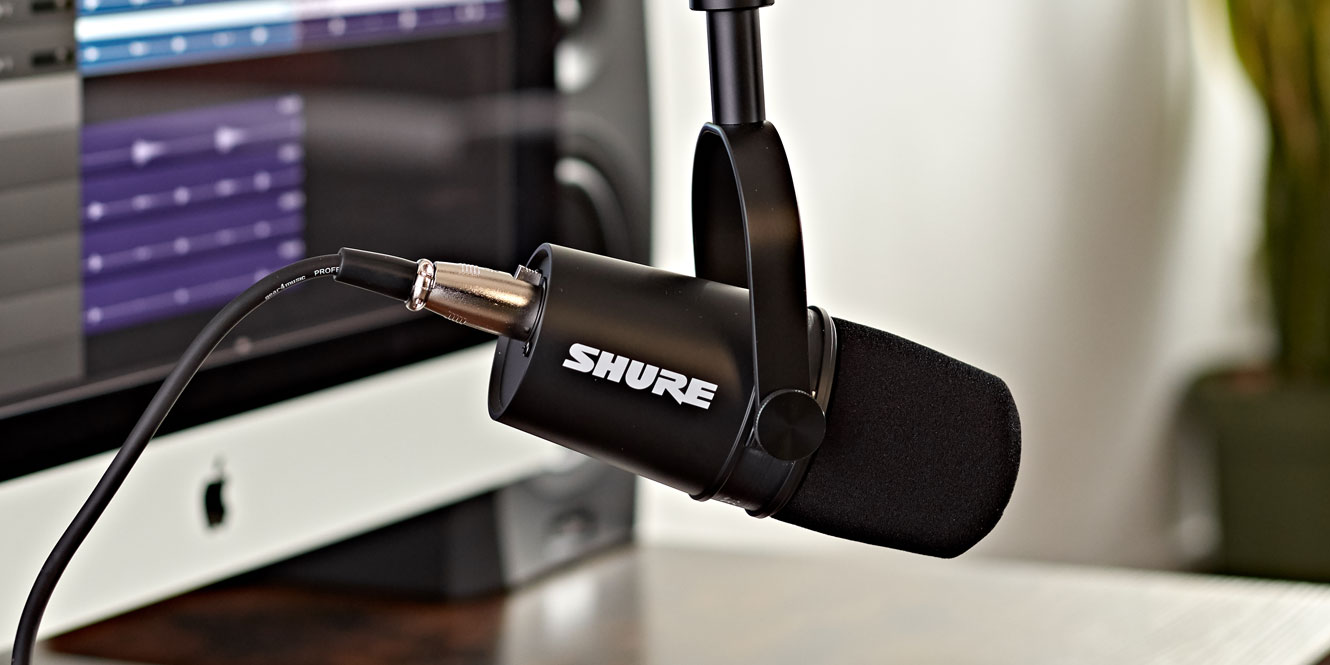

Whether you’re hosting a podcast, creating YouTube videos, or streaming a game online, you’ll probably want clear, crisp sound. One crucial piece of equipment that can help you get there is a noise-cancelling microphone.
Within industry circles, these microphones are referred to as “noise-rejecting mics”, a term that describes their polar pattern and how effectively they reject unwanted sound from various directions. But for beginners, the ins and outs of these microphones can be confusing. So, in this article, we’ll demystify the world of noise-rejecting mics and give you some ideas of the best noise-cancelling microphones for content creation.
In a hurry?
Here are our top three microphones and why we love them:
| Rode NT1 Signature Series | An all-rounder condenser mic that’s as well-suited to studio recording as it is to content creation. | Check the current price |
| Shure MV7X | A dynamic microphone with heritage from the SM7B and that classic broadcast sound. | Check the current price |
| G4M Studio Condenser Microphone | Onboard low-cut and pad switches give you excellent control over your sound. | Check the current price |
The best noise-cancelling microphones
1. Rode NT1 Signature Series
 Key features
- 1-Inch true condenser capsule
- Ultra-low noise level (4dBA)
- 142 dB maximum SPL
Pros
- Balanced and detailed sound from condenser element
- Comes with shock mount and premium XLR cable
- High SPL handling means it works with loud sound sources
Cons
- Lacks the USB connectivity and additional features of NT1 5th Gen
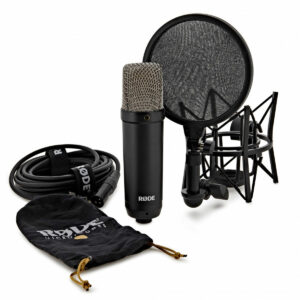
The Rode NT1 Signature Series Condenser Microphone is built for all kinds of professional audio recording. With its 1-inch true condenser capsule, it provides a rich bass response, intricate midrange, and a sparkling top end, easily capturing the full spectrum of your voice or instrument with precision.
The NT1 Signature provides an ultra-low noise level of 4dBA, making it one of the quietest studio condenser microphones ever made. Such low noise levels result in impeccably clean, professional-grade audio, enhancing the quality of your recordings significantly.
Additionally, the microphone’s high SPL handling allows it to record even the loudest sound sources without distortion or clipping, whether you’re recording spoken word or a hard-hitting drum kit.
The NT1 comes complete with a shock mount and a premium-quality XLR cable, providing everything you need to start recording immediately.
2. Shure MV7X
 Key features
- Cardioid dynamic microphone
- Takes inspiration from the sound and form factor of the SM7B
- Secure broadcast-style mounting system
Pros
- Superior noise rejection with dynamic design
- No need for preamp due to increased output level
- Live monitoring capability for precise audio control
Cons
- Lacks bonus features and USB connectivity
As one of the best noise-rejecting microphones, the Shure MV7X XLR Podcast Microphone offers a range of features that make it stand out. Primarily, its cardioid dynamic design provides fantastic noise rejection, ensuring clear and professional audio recordings. This makes it an ideal choice for podcasters, voiceover artists, and musicians alike who require pristine audio quality.
Taking its heritage from the legendary SM7B, the MV7X is simple, direct, and usable. Designed to sound great in untreated rooms on spoken word and other vocal applications, the MV7X comes with an XLR connector – perfect for podcasters and producers.
Whilst this simplicity might not fit everyone’s needs, the MV7X offers a premium, broadcast-ready sound with all the warmth, depth, and fullness that any content creator needs for their videos or podcasts. Combined with Shure’s typically sturdy build quality, the MV7X is a great place to start for those seeking that all-familiar vocal sound that sits upfront with no extra hassle.
2. G4M Studio Condenser Microphone
 Key features
- Detailed 20Hz-20kHz frequency range
- Onboard pad and filter switches
- Cardioid polar pattern
Pros
- Enhanced control with low-cut and pad switches
- Superior sound isolation with cardioid pattern
- Reliable output and seamless integration
Cons
- Greater sensitivity requires a treated space for proper performance
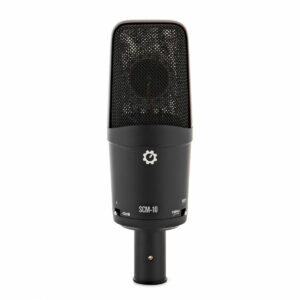
The G4M Studio Condenser Microphone is a professional-grade microphone with the affordability and ease of use to suit beginners. Designed with studio recording, broadcasting, podcasting, live sessions, and more in mind, its detailed 20Hz-20kHz frequency range ensures an accurate, high-quality relay of any source.
Onboard pad and filter switches provide the ability to adjust the sound right at the source, tailoring it to specific needs. This enhanced level of control proves invaluable in various recording scenarios.
What’s better, the mic has a cardioid polar pattern, providing superior sound isolation. This pattern captures sound primarily from the front while rejecting unwanted noise from the sides and rear, resulting in a cleaner, more focused recording.
The G4M Studio Condenser Microphone also offers enhanced control with its low-cut and pad switches. The low-cut switch effectively reduces low-frequency rumble and unwanted background noise, while the pad switch allows for sensitivity attenuation by 12dB, making it suitable for capturing loud sound sources without distortion.
With its reliable output and seamless integration, the G4M Studio Condenser Microphone is built to last and deliver professional-quality recordings. It’s a versatile and reliable tool for capturing sound with clarity and precision, making it an excellent choice for musicians, podcasters, or content creators.
4. SubZero DB20U
 Key features
- Super-directional cardioid
- USB-C and XLR outputs
- Smooth frequency response
Pros
- Ideal for podcasting and spoken content
- Plug-and-play USB-C connection
- Sturdy, professional-grade build
Cons
-
No onboard gain control
Purpose-built for voice, the SubZero DB20U is a solid choice if you’re podcasting, streaming, or recording vocals. Its focused cardioid polar pattern is designed to reject surrounding noise, and it’s exactly why the mic has made the list.
The dual output gives you flexibility. Use USB-C to connect directly to your computer or compatible phone – no interface or phantom power needed. Or switch to the XLR output if you’re upgrading your setup later. It’s great for creators working across different environments.
You’ll get a clear, natural vocal sound thanks to its wide frequency range and dynamic design. It’s particularly good at capturing low-end warmth without losing clarity at the top, which helps voices sound full but not muddy. The 78dB signal-to-noise ratio also helps keep your recordings clean and free from unwanted hiss.
Plus, it’s solidly built. At 860g, it stays put once mounted, and the included windscreen keeps plosives and breath sounds in check. Whether you’re just starting out or ready to refine your setup, the DB20U offers reliable performance with all the essential features you need for voice recording.
5. Rode Podmic USB
 Key features
- Ideal for podcasting, broadcasting, and live-streaming
- XLR and USB-C connectivity
- Internal pop filter
Pros
- Excellent off-axis rejection thanks to a tight cardioid pattern
- Natural, broadcast-quality sound tailored for speech and vocals
- Built to last with a rugged stainless-steel mesh and metal body
Cons
- No included shock mount
The Rode Podmic is a dynamic broadcast microphone designed to deliver rich, focused audio with impressive noise rejection. Its tight cardioid polar pattern isolates your voice from surrounding distractions, helping you achieve clean, professional-sounding results even in lively or untreated rooms.
Inside, the Podmic features an internal pop filter and a carefully tuned capsule that provide clear, detailed speech capture. It’s a go-to for podcasters, streamers, and voiceover artists because of its warm, balanced tone that sits comfortably in a mix without the need for heavy processing.
Built for repeated daily use, the Podmic’s all-metal construction gives it outstanding durability, making it ideal for long-term studio setups and regular recording sessions. Its integrated swing-arm mount also offers smooth, reliable positioning straight out of the box. Plus, there’s XLR and USB-C connectivity for an exceptionally quick and easy setup.
6. Lewitt RAY
 Key features
- Automatic voice focus technology (AURA)
- Distance-based muting functionality
- 1-inch true condenser capsule
Pros
- Professional-quality audio with minimal setup
- Convenient distance-based mute feature
- Includes essential accessories
Cons
- Requires 48V phantom power
The Lewitt RAY microphone is an innovative, high-quality mic that’s excellent for content creators, broadcasters, and musicians. At the core of its design is AURA technology, which keeps your voice clear and consistent, adapting automatically to your distance from the microphone. This ensures a polished sound in dynamic environments without you constantly having to adjust the mic.
Its ‘Mute by Distance’ makes it even easier to get a professional recording. All you have to do is set a preferred range, and the mic will mute or unmute as you move. It’s ideal for presenters or streamers who need effortless control without fiddling with buttons. A dedicated mute button provides instant manual control.
For detailed sound pickup, there’s a 1-inch true condenser capsule, and for reduced background noise, there’s a cardioid polar pattern, keeping the focus on your voice. Plus, a magnetic pop filter, a shock mount, and a windscreen are included.
7. Electro-Voice RE20
 Key features
- Variable-D technology which minimises the proximity effect
- Cardioid pickup pattern
- 45Hz – 18kHz frequency response
Pros
- Exceptional noise rejection capabilities
- Delivers professional studio performance
- Internal pop shield prevents plosive distortion
Cons
- Large, bulky design and body shape require a heavy stand for stability
The Electro-Voice RE20 Dynamic Cardioid Microphone boasts variable-D technology that ensures a consistent sound quality regardless of the distance from the microphone, effectively minimising the proximity effect.
The microphone’s cardioid pickup pattern further enhances performance by eliminating sound colouration from unwanted sources. This leads to clear and undistorted audio, making it ideal for various recording scenarios.
Plus, with its smooth frequency response of 45Hz – 18kHz, which has been specifically tailored for vocals, every nuance of sound is accurately reproduced with clarity and detail.
Additionally, the microphone comes equipped with an internal pop shield. This prevents distortion caused by plosive sounds like “p” and “b,” ensuring smooth and clean vocal recordings.
Widely recognised for delivering professional studio performance, the Electro-Voice RE20 is suitable for beginners, too. It offers a range of features designed to enhance your recording experience, whilst its noise-rejection capabilities make it a top choice for recording in challenging, noisy, or untreated environments.
Our top tips for getting the best sound
Get the correct placement – The microphone should typically be 3 to 5 inches away from your mouth and angled slightly away from you, by about 30 degrees. This helps reduce plosives and boost low frequencies with a proximity effect for a little extra warmth.
Set your gain correctly – While setting up, monitor through headphones and talk into your microphone. Make sure you sound right to your own ears and watch the meters on your interface or mixer to make sure you aren’t clipping. Speak at full volume, even yell to make sure your loudest volume won’t cause issues, and try to set your gain so no matter what volume you’re at, your voice is clear, audible, and not clipping!
Check for phantom power – If you’re using a condenser, you’ll need phantom power to get any signal. If you’re using a dynamic, be careful and make sure you don’t have phantom power, as this can risk damaging your mic’s components.
Treat your room – Proper acoustic treatment goes a long way to improving the sound quality of your space.
Use a pop filter – Even mics with built-in pop filtering aren’t totally immune to distortion from plosives, get something else between you and your mic!
FAQs
How do I stop my microphone from picking up noise?
To stop your microphone from picking up noise, first, make sure you’re using a noise-rejecting microphone (one with a cardioid polar pattern or similar), then adjust the microphone’s settings, use a pop filter, and ensure the recording environment is as quiet as possible (you may need to use acoustic treatment).
How do I stop my mic from making noise?
To prevent a microphone from producing noise, ensure the microphone is properly connected and check if any loose parts could be causing the issue. Also, consider the acoustics of the recording location – carpets, curtains, and other soft furnishings can help absorb sound and reduce echo.
What is a noise-rejecting microphone system?
A noise-rejecting microphone system refers to a type of audio equipment designed to minimise unwanted ambient noise. This is often accomplished through the use of a directional or cardioid polar pattern, which picks up sound predominantly from one direction. Such systems are particularly useful in noisy environments or when recording delicate sounds.
Final thoughts
From the Shure MV7X’s dynamic capsule that ensures meticulous sound reproduction to the Electro-Voice RE20’s Variable-D technology that minimises the proximity effect, we hope our list of the best noise-cancelling microphones has shown you that there is one out there to suit every personal need.
Want to learn more? We’ve covered the different types of microphones you should know about, which offers a comprehensive overview of various microphone categories. Additionally, resolve common audio issues by exploring our article on speaker popping and how to fix it.



0 Comments