


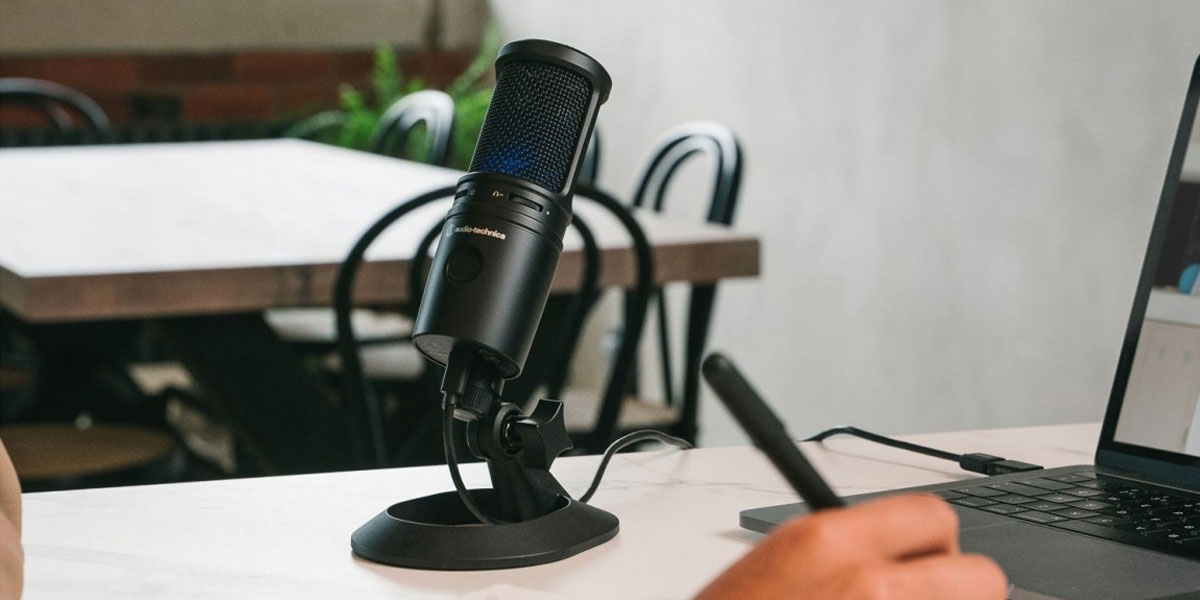
USB microphones are becoming a competitive and very sought-after design in the current age of content creation. Having gone from a niche made by gaming and tech companies to a plethora of professional designs by established audio professionals, USB mics serve a range of purposes and have all kinds of features.
So, where should you start? We’re breaking down the best budget USB microphones for content creators, podcasters, gamers, and home-recording musicians.
In a hurry?
Here’s a quick rundown of our top five picks for USB microphones under £200:
| Rode NT-USB Mini | Clear USB condenser microphone with 360-degree rotation on stand and built-in DSP effects. | Check the current price |
| Sennheiser Profile | User-friendly back-to-basics USB microphone with comprehensive on-board monitoring options. | Check the current price |
| G4M Dynamic Broadcast Microphone with USB | XLR and USB-equipped dynamic microphone with broadcast-inspired sound for podcasting, content creation and music. | Check the current price |
| Behringer D3 PODCAST BUNDLE USB Microphone with Boom Arm and Pop Filter | An all-in-one solution: easy to set up, crystal-clear recordings, and reduced plosives. | Check the current price |
| Shure MV6 USB Gaming Microphone | A favourite for gamers and streamers, this mic captures your voice, and only your voice, courtesy of Voice Isolation Technology, Digital Popper Stopper, and more. | Check the current price |
The best budget USB microphones
1. Rode NT-USB Mini – The best compact USB mic
 Key features
- 360-degree swivel mount
- Easy plug-and-play setup
- Built-in pop filter
Pros
- Crisp, clear audio reproduction
- Ideal for home studios and mobile recording
- Detachable magnetic stand for stability
Cons
- Limited versatility for advanced users
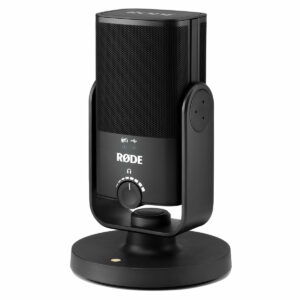
The Rode NT-USB Mini is a small-format USB condenser microphone for podcasting, music recording, gaming, streaming, and content creation. Taking the warm, clear sound of Rode’s famed NT-series microphones, the NT-USB Mini sounds clear and articulate.
The built-in magnetic desktop stand can fully swivel up to 360 degrees, making it easy to achieve the ideal position. Plus, with a built-in studio-grade headphone amplifier, you can monitor your sound directly from the mic with no latency.
The NT-USB Mini has a cardioid polar pattern for rejecting background noise and a built-in pop filter for reducing plosives and sibilance, making clear recordings easy to achieve. Plus, a little after release, Rode released a few key firmware updates that really expanded the capabilities of this mic.
Through their Rode Connect app, you can connect up to four NT-USB Mini units to a single computer and have advanced video call and streaming integration. This makes it great for gamers and streamers, whether you just have the one for yourself or all four for guests.
The new app also provides DSP effects – compression and a noise gate for utility, the APHEX Aural Exciter to add extra sheen and polish to your voice, and Big Bottom for, you guessed it, accentuating the low-frequencies. There’s even an app-based Sound Pad that lets you load and trigger up to 64 sounds.
Coming in at a great price, the NT-USB Mini is not just a no-brainer for streamers, podcasters, content creators, and gamers, but is also an attractive choice for musicians thanks to its great sound.
2. Sennheiser Profile – The best plug-and-play microphone
 Key features
- Tailored voice capture technology
- Cardioid condenser
- Integrated shock mount
Pros
- Exceptional clarity for speech and singing
- Plug-and-play with Windows and Mac
- Sleek, professional design
Cons
- Lacks DSP effects, software mixing and other advanced features
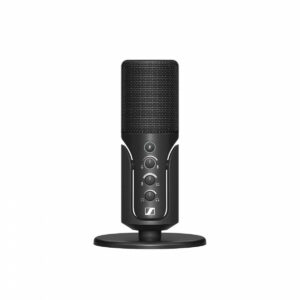
The Sennheiser Profile is about as stripped back and to the point as a USB microphone can get, but this is definitely to its benefit. I was given the opportunity to review the Profile about a year ago, and as a self-professed USB mic sceptic at the time, it really won me over.
Whilst all of the advanced features of USB mics like DSP effects processing, software mixers, and samples are fantastic all-in-one solutions for content creators and streamers who want them, sometimes you just want a mic that functions exactly like a traditional XLR design – you plug it in, it works, and it sounds good. This is the experience that the Profile offers.
Taking its German-made KE 10 mic capsule from Sennheiser’s shotgun designs used for film and TV, the Profile has been tuned for a more vocal-focused sound, giving a pleasingly neutral midrange with a slight low-end emphasis and a smooth presence boost that reminds me of many of the typical go-to vocal condensers. It’s a subtle but clear sound that’s hard to argue with.
Rounding out the Profile are its mute button and monitoring features. The input gain has an LED ring that lights up green to indicate good signal levels, but turns red when it starts clipping, so you know how to achieve the right levels.
Then you have two monitoring level controls. One balances the volume of the mic with your computer sound, so you can hear yourself back without latency, and balance it with a backing track you’re recording to. This is a rare feature on USB microphones and a very welcome addition, especially for musicians. The second is a headphone volume control that lets you set a comfortable output for your monitor mix.
For the price, the Profile punches well above its weight, and while some of the missing bonus features might put off some creators who really want those effects and extra controls, anyone looking for simplicity and a full sound will feel right at home with this one.
3. sE Electronics NEOM – The best sound quality
 Key features
- 24-bit/192kHz recording quality
- Cardioid polar pattern
- Built-in headphone output
Pros
- High-resolution audio capture
- Ideal for podcasters and streamers
- Easy to use with simple controls
Cons
- May require an additional pop filter for the best results
sE Electronics are a pretty underrated microphone company that make some excellent mics for home recording musicians and engineers. The NEOM is their first USB offering, and it deserves its place in the conversation among some of the best USB microphones around right now.
This is a condenser with a small 16 mm capsule and a detailed and full sound with plenty of low-end that’s great on vocals and guitars.
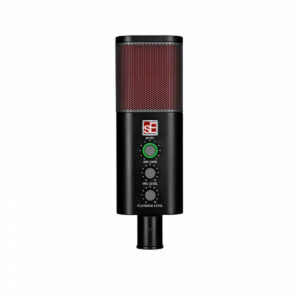
The NEOM has a more traditional form factor than many other USB microphones, as well as a taller desktop stand than many competitors, which places it closer to your mouth when used on a desk, giving better clarity. Its classic studio mic look is also great for stand-mounting and absolutely ideal on boom arms. It also has a pretty sizeable gain range, with a dial that goes all the way to 11 – quite literally!
The full and detailed sound of the NEOM feels reminiscent of sE’s other condensers, like the X1 A or the SE2200, but with USB-C connectivity. For anyone who’s used these microphones, that’s no light compliment. The NEOM has a fantastic sound for vocals particularly in professional recordings thanks to its 24-bit conversion and adjustable sample rate that gives everything from 44.1 kHz to 192 kHz for sweeping fidelity.
Separate level controls for microphone and playback level on the headphone output give you the same monitoring flexibility as the Profile with a little more control than just balance.
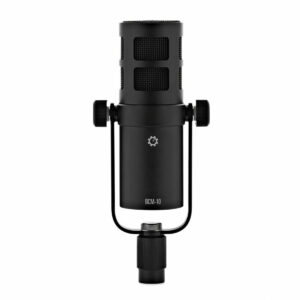
4. G4M Dynamic Broadcast Microphone – The best podcasting microphone under £200
 Key features
- Dynamic microphone
- Cardioid pickup pattern
- Durable metal construction
Pros
- Robust design suitable for rough handling
- Warm, rich sound quality
- Direct monitoring via headphone jack
Cons
- Not as detailed as condenser microphones
The G4M Dynamic Broadcast Microphone is the first dynamic USB microphone on this list. And by the first look, you can probably tell what its strength is: podcasting. Obviously suited to the thick, warm vocal sounds you’d expect from its design, the G4M broadcast microphone has a wide tailored frequency response and dual outputs: XLR and USB.
While its authoritative sound is crisp and great for podcasts, it’s also great for streaming and music, and the dual outputs let you switch from a plug-and-record USB connection to a more professional XLR connection to integrate with other studio equipment.
Encased in durable metal housing with a high-grade swivelling shock mount that reduces handling noise and lets you achieve comfortable positioning, the G4M Broadcast Microphone feels and sounds great while offering long-lasting reliability.
5. Behringer D3 PODCAST BUNDLE USB Microphone with Boom Arm and Pop Filter – The easiest podcast setup
 Key features
- Cardioid mic
- All-metal construction
- Includes boom arm and pop filter
Pros
- Clear, focused vocal sound
- Adjustable and sturdy boom arm
- Rugged, all-metal construction
Cons
- No onboard headphone output
If you need a reliable all-in-one solution for home voice recording, take a look at the Behringer D3 Podcast Bundle. The USB mic, the Behringer D3, captures clear, natural-sounding vocals with its cardioid polar pattern, which helps to reduce unwanted background noise. Plus, it’s built with an all-metal body for durability and longevity.
As well as the handy USB connectivity, what really makes it so convenient is the included boom arm and pop filter. The boom arm is sturdy and adjustable, and once it’s set up, it stays in place for those longer podcast records. You’ll also find a desk clamp included, so you can attach it securely without taking up too much space.
The pop filter softens harsh vocal sounds and helps reduce plosives, so your recordings sound cleaner and more professional. Paired with the mic’s focused pickup pattern, this can make a noticeable difference in how your voice comes across.
6. Shure MV6 USB Gaming Microphone – The best for isolating vocals
 Key features
- Auto Level Mode and Voice Isolation Technology
- Digital Popper Stopper
- Real-time Denoiser
Pros
- Quick tap-to-mute functionality
- Built-in headphone monitoring
- Customisable DSP settings via app
Cons
- No included mic stand or boom arm
The Shure MV6 USB Gaming Microphone is packed with a range of technology to ensure your voice is captured loud and clear, without plosives and the disruption of background noise. And the best part is that it doesn’t require manual adjustments.
First, there’s Auto Level Mode, which keeps your voice at a steady volume, even if you move closer or further from the mic. This is ideal if you tend to shift around during games or change your position while streaming.
A built-in Digital Popper Stopper then helps remove plosive sounds like hard “p”s and “b”s, so there’s no need to purchase an external pop filter. Your audio will sound natural and polished, with fewer harsh interruptions.
The MV6 also features a Real-time Denoiser that intelligently filters out background sounds such as PC fans or ambient room noise. Shure’s Voice Isolation Technology takes this further by focusing on your voice, and only your voice, eliminating room noise. This gives your recordings and broadcasts a clean, focused sound that puts you front and centre.
A tap-to-mute function gives you that instant control, letting you mute your mic with a single touch. You also get a 3.5mm headphone output for real-time monitoring.
Compatible with Windows, Mac, Android, and iOS devices, the MV6 works seamlessly with the Shure MOTIV apps for deeper control. You can adjust gain, tweak EQ, and use built-in effects to tailor the mic to your voice and space.
7. SubZero DB20U – The best for capturing low frequencies
 Key features
- Super-directional cardioid pickup pattern
- 40Hz – 20kHz frequency response
- 135dB max. SPL
Pros
- Clear and warm vocal capture
- Plug-and-play USB setup
- Heavy, durable metal build
Cons
- No onboard headphone output
The SubZero DB20U is tailored to voice-based content. Its super-directional cardioid pattern picks up only what’s directly in front of it, cutting out background noise like keyboard clicks and ambient hums. Whether you’re live or pre-recording, your voice stays clear and defined.
With USB-C connectivity, it’s easy to get started straight out of the box. You can plug it directly into your computer or a compatible mobile device – no interface or phantom power required. And if you’re planning to expand your setup later, the built-in XLR output gives you that flexibility.
Its frequency range spans 40Hz to 20kHz, meaning it captures all the character of the human voice, from low warmth to bright detail, without sounding overly processed. A 78dB signal-to-noise ratio also helps minimise hiss and maintain clarity in quieter moments.
Physically, it’s built to last thanks to its metal housing. It also comes with a windscreen to cut plosives and soften breaths, giving your audio a smoother finish.
8. Rode NT1 5th Gen – The best for studios
 Key features
- 32-bit float digital output
- Dual USB-C and XLR output
- Onboard DSP with broadcast-ready effects
Pros
- Exceptionally low self-noise and high sensitivity
- Includes shock mount, pop filter, and cables
- Works with or without an audio interface
Cons
- Higher price compared to basic USB mics
It’s not crazy expensive, but its price is higher than that of others on this list. Still, the Rode NT1 5th Gen makes our list because it offers fantastic value for money. Its headline feature is the 32-bit float digital output, which eliminates the risk of clipped audio. Even if your recording peaks too high, you can adjust the level afterwards without sacrificing quality – ideal for vocalists, podcasters, or creators working with dynamic sources.
The mic’s one-inch gold-sputtered condenser capsule offers an extended frequency response and ultra-low 4dBA self-noise, so it’s able to capture subtle detail without adding hiss. Thanks to its high sensitivity and SPL handling, it performs just as well on quieter sources as it does with louder ones like percussion or ambient recordings.
Its built-in Revolution Preamp delivers 76dB of gain with extremely low noise, meaning you won’t need an external booster. Plus, the onboard DSP offers a range of studio-grade effects, including a compressor, noise gate, and tonal shaping tools like the Aural Exciter and Big Bottom – all customisable through Rode’s software.
With both USB-C and XLR outputs, you can plug it straight into your computer or run it through an audio interface, giving you long-term flexibility as your setup grows. The bundle also includes a shock mount, pop filter, USB and XLR cables, and a dust cover – everything you need to get recording straight away.
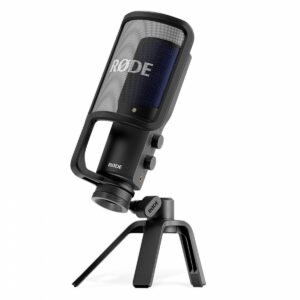
9. Rode NT-USB+ – The best expanded model
 Key Features
- Studio-grade condenser capsule
- Zero-latency headphone monitoring
- Direct mix control between mic input and source output
Pros
- Professional recording quality
- Ideal for vocals and instruments
- Includes pop shield and tripod stand
Cons
- No physical gain control on microphone body
The Rode NT-USB+ is the expanded form of the NT-USB range. Sharing some features in common with the Mini, the NT-USB+ features the same Rode Connect app connectivity and effects to deliver a polished, professional sound easily.,
Rode have also added their Revolution preamp from their Rodecaster series mixers into the microphone, giving it a gain boost with a clean and mostly neutral sound that adds just a touch of extra fullness to its sound. The NT-USB+ is a great refinement and expansion of the series that’s great for content creators, podcasters, and vocalists while having the extra fidelity to really shine on instruments too.
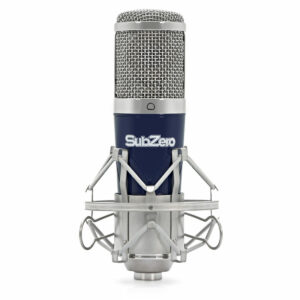
10. SubZero SZC-500-USB – The best USB microphone for beginners
 Key features
- Cardioid pickup pattern
- Plug-and-play with USB connectivity
- Desktop stand and USB cable included
Pros
- Ideal for podcasts and home recordings
- Easy setup, no drivers needed
- Clear sound for its price range
Cons
- Lacks more advanced features
The SubZero SZC-500-USB is a large diaphragm condenser microphone designed for vocals and spoken word. The SZC-500-USB is another no-frills mic, which shouldn’t be a surprise at its price, no fancy software and effects or driver installation are required – just plug in and record without hassle.
This microphone delivers a full, warm sound with a broad frequency response. Built to last with a hard-wearing metal chassis it also includes a shockmount for extra protection and to avoid handling noise.
The SZC-500-USB is a great pick for newcomers to recording, so content creators, podcasters, and musicians looking to make a start with a wallet-friendly microphone that has instant and simple recording can find exactly what they need here.
11. SubZero USB Conference Microphone – The best for offices and meetings
 Key features
- Plug-and-play USB connection
- Onboard tone and gain controls
- Heavy-duty metal chassis
Pros
- No software installation required
- High-quality digital audio conversion
- Non-slip pad reduces table noise
Cons
- Limited pickup range for larger rooms
The SubZero USB Conference Microphone works straight out of the box and is the ideal setup for meetings or conference calls. The onboard converter delivers audio at a higher-than-CD sample rate, ensuring your voice is captured cleanly and in detail.
A control panel allows you to make quick adjustments to bass, treble, and gain settings. This means you can fine-tune the mic’s tone to suit different environments, helping you maintain a professional sound whether you’re in a small meeting room or a busy shared space.
The metal housing and steel wire mesh grille offer solid protection, while the non-slip rubber pad underneath keeps the mic stable and helps to reduce vibration noise from the table. Two holes on the back also give you the option to mount it on a wall, adding flexibility to your setup.
12. Behringer D2 – The most versatile USB mic
 Key features
- Dual XLR and USB outputs
- 24-bit/96 kHz high-resolution audio
- Built-in headphone monitoring
Pros
- Versatile for different recording setups
- Clear, detailed sound capture
- Zero-latency monitoring via headphone jack
Cons
- Doesn’t include a stand or mount
The Behringer D2 Podcast Pro is a dynamic microphone that’s well-suited to a variety of recording needs – from spoken voice and podcasts to musical instruments and gaming streams. Its large diaphragm helps capture rich, clear sound across a range of applications, giving you a dependable tool whether you’re working on vocals or content creation.
With both XLR and USB outputs, the D2 offers flexibility in how you record. You can plug straight into your computer via USB for a quick setup, or use the XLR connection with an audio interface for more control in a studio environment. This dual connectivity makes it easy to fit into your existing gear, whether you’re upgrading or just starting out.
The onboard 24-bit / 96 kHz audio codec ensures your recordings are crisp and full of detail. Combined with a zero-latency headphone output, you can monitor your audio in real-time – helpful for picking up on any issues during a session.
There’s also a built-in LED indicator to help you manage gain levels and mute the mic when needed. The microphone swivels up to 270 degrees for flexible positioning, and it comes with a foam windscreen to help reduce plosive sounds.
13. Teenage Engineering CM-15 – The travel-sized mic
 Key Features
- ESS Sabre A/D converter
- Three-mode gain control switch
- Super-cardioid gold condenser capsule
Pros
- Compact, portable and battery-powered
- Multiple outputs: USB-C, XLR, 3.5mm
- Integrated stand and mic stand adapter
Cons
- Mic stand not included in the box
The Teenage Engineering CM-15 is a compact condenser microphone. Inside, you’ll find a large diaphragm gold condenser capsule with a super-cardioid polar pattern – ideal for detailed vocal or instrument capture with reduced background noise. This makes it particularly useful in untreated spaces or when recording on the go.
One of its best features, though, is the ESS Sabre analog-to-digital converter, which helps preserve the character and clarity of your audio as it moves into the digital realm, giving you natural, open recordings. The mic connects via USB-C, which also charges its internal battery, offering up to 10 hours of operation.
You’ll also find a mini XLR output with 48v phantom power for full analogue recording, plus a 3.5mm jack for use with portable devices.
The gain switch on the back offers three levels, so you can tailor the mic’s sensitivity for vocals, instruments, or louder sources. Its sturdy metal design is built to travel well, and a discreet integrated stand means you can place it on any flat surface.
14. Shure MOTIV MV5C – The best desktop mic
 Key features
- Condenser, cardioid mic
- 20 Hz – 20 kHz frequency response
- Headphone output
Pros
- Blocks out background distractions
- Easy setup for Mac and Windows
- Compact with adjustable desktop stand
Cons
- No built-in gain or tone controls
The Shure MOTIV MV5C is a USB microphone designed with speech in mind. Its cardioid pickup pattern focuses on your voice while minimising room noise – helpful if you’re working in shared or noisy environments.
There’s also a built-in headphone jack that gives you real-time monitoring with zero latency. This means you can hear your voice exactly as it’s being captured, making it easier to adjust your speaking volume or mic position on the fly.
The mic comes with a detachable stand that sits neatly on your desk and can be angled for the best pickup. If you’re expanding your setup, it’s also compatible with standard mic stands.
How to choose the best budget USB mic
There are a few ways to determine the best USB microphone for your budget. The first is to know your limit, how much are you willing to spend at the absolute most? While you can find some gems at any price, you tend to get what you pay for, so knowing the general feature set of your price bracket will go a long way.
The next thing is to work out what you want to use it for. This is important as it’ll help you work out what features to look for in every other area.
Do you want to use it for gaming with your friends? Podcasting? Streaming? Video conferences? In-person interviews? Music? You’ll probably have a combination of several of these in mind, but these priorities will help you know what to look for. This can inform every other step of your buying process.
The microphone type is very important as this will determine how it’s used, and to some extent, the sound of the microphone. For example, dynamics sacrifice detail for a few benefits: managing louder noises before distortion, cancelling out more ambient noise in untreated spaces, and being more resistant to plosives due to often having a built-in pop filter.
Dynamic mics are great for podcasting, streaming, and gaming with friends.
However, condensers are far more detailed – ideal if you need a polished sound for video conferences, long-form video content, or recording instruments or vocals. Condensers are generally more versatile since they’re also just as usable for gaming, streaming, and podcasting, but they can be more sensitive and prone to distortion from loud sounds too – so be aware to set the gain at a good level.
They’re also susceptible to plosives, so it may be worth considering a pop filter if one isn’t included with the mic. The choice is really down to preference and how you want to use it.
Finally, we need to think about additional features. Do you want to record to your phone? Is there an app or included cable that’ll let you do so? Do you need stereo recording? Do you want DSP effects to create a fully polished and processed sound, or do you have effects and recording software that you can do that with already? Is the polar pattern right for you?
I can’t answer any of these questions for you, but these are some common features that the mics on this list have. They’re good to be aware of if you need them to meet your requirements or don’t want to pay for any unnecessary features.
Accessories to complete your setup
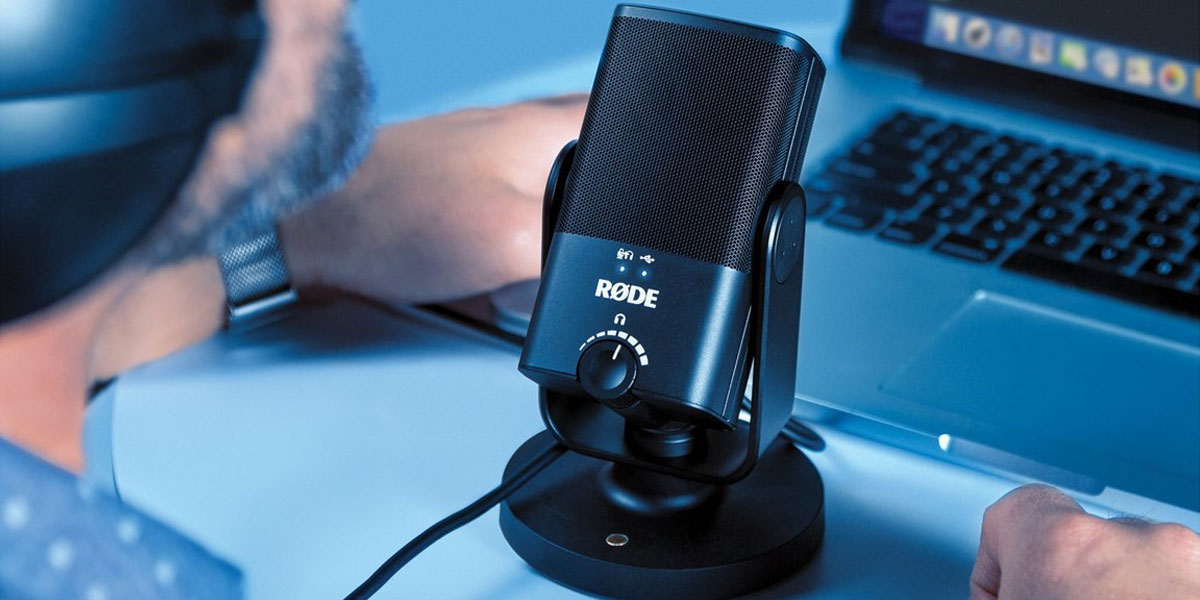
So, what else might you need with your microphone? Honestly, it depends on what you pick and how you want to set it up. For example, most mics come with a desktop stand. That said, it may still be worth investing in a boom arm or other stand, as you can position them closer to the source you want to record, getting a fuller and more detailed recording.
Pop filters aren’t always included, but they often are. If your mic doesn’t include one though, it’s worth getting, especially for a condenser which is far more susceptible to clipping from plosives.
FAQs
Is it worth getting a USB microphone?
USB microphones offer convenience and quality, making them a solid choice for beginners and pros alike. Their plug-and-play design requires no extra gear and provides studio-quality sound for various applications.
Are cheap microphones worth it?
Affordable microphones can be a great investment, especially for those just starting out. They allow you to explore recording without a hefty price tag, though higher-end mics might deliver superior sound quality.
Is an XLR mic better than a USB mic?
XLR microphones can offer better sound quality and versatility, suited to professional studios. However, USB mics provide simplicity and ease of use, making them ideal for home studios and portable recording setups.
Final thoughts
USB microphones can cover a wide range of different use cases and vary heavily in terms of features and sound, but there should be something for every need on this list of the best budget USB microphones.
Hopefully, you have a few options to weigh up and know exactly what accessories you need to get great, fast recordings for podcasts, streams, music, and any other kind of content you want to make.




0 Comments