

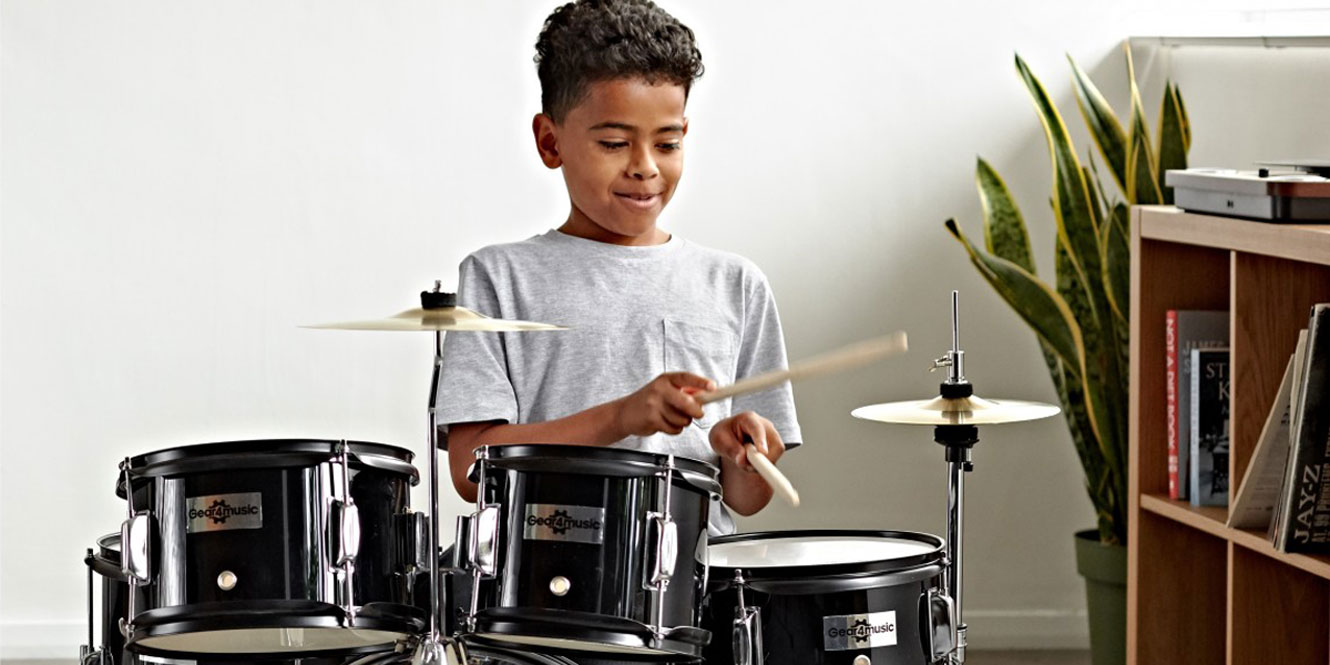

People pick up skills at all stages of life, but our most formative years are arguably the best time to learn – especially when it comes to music. Just like mastering a language, children tend to grasp the ability to play an instrument more easily than an adult can. Their brain is like a sponge, and they have more time to practise – usually without the stresses of everyday adult life getting in the way.
If you’re looking to learn an instrument yourself, though, don’t let this put you off – there are plenty of benefits that music will give you as an adult, from escapism to improved attention span and problem-solving abilities.
But we’re here to talk about children learning music. One of the biggest hurdles you might come across as a parent – after actually choosing and purchasing the instrument – is encouraging your child to practise.
In this guide, we’ll give you some tips for getting your child to practise their instrument. The idea is that they should feel motivated themselves and want to practise on their own accord, without pressure.
Here at Gear4music, we’re, of course, well-versed in the world of instruments, with a plethora of experience and expertise between us. But some of us here are also parents, with children spanning a range of ages. These top tips are genuine, tried-and-tested methods.
Key takeaways
Here are our top three tips for encouraging your child to practise:
- Remind them of their goal and how rewarding it’ll feel to reach it
- Encourage your child throughout their practice session
- Keep the instrument out on show, so they can easily access it
Why should children learn music?
Learning music can support a child’s development in extremely meaningful ways. Firstly, musical training strengthens cognitive skills by engaging areas of the brain linked to memory, language, and problem-solving. Studies have found that children who learn an instrument often show improved verbal memory and executive functions like focus and planning.
It also helps with emotional development. Music provides a creative outlet for self-expression, allowing children to process and communicate emotions. Over time, this can nurture greater self-confidence and creativity.
Then there’s the coordination, i.e., fine motor control and rhythm skills. Playing an instrument requires you to move fingers and limbs in an ambidextrous manner, meaning it creates a strong mind-body connection. And because music often involves working with others — in lessons and ensembles — it supports social development and collaboration, too.
How to encourage your child to practise
1. Remind them of their goal and how rewarding it’ll feel to reach it
 Your child won’t have the same sense of discipline as you. They might have a specific aim in mind for their practice session, either self-motivated or given to them by their teacher, but they may need support to help them stick to it.
For example, if your child wants to learn the intro to their favourite song, remind them of how great it’ll be to play along to the track. If they’re practising for a specific recital, emphasise how preparation will help them feel way more comfortable on the day.
2. Encourage your child throughout their practice session
Sometimes, your child will want to just get on with it themselves, but other times, they’ll require a few words of encouragement to see them through.
Whether it’s a round of applause, an acknowledgement of their progress, or an “I believe in you”, showing your pride in them can give them the motivation they need to keep learning.
It’s also a good idea to take a genuine interest in what they’re playing. Ask them about it and get them to explain certain techniques to you – this can also help them better understand it.
3. Keep the instrument out on show, so they can easily access it
 There’s nothing more demotivating than wanting to play your instrument as soon as you get home, but having to pull it out of the cupboard, unpack it, and set it up.
To make things easy for your child, keep their music gear out around the house. It will absolutely lead to more regular practice!
“We have found that if you put instruments away in a cupboard, they tend to forget about playing them, so we try and keep them out on show. They keep playing their VISIONDRUM Kit in the mornings and evenings because it’s in the main living area – we will have to move it soon to make more space!” – Kobi McCardle, Gear4music.
4. Make sure they’re playing a well-built, good-sounding instrument
A durable instrument designed to withstand regular practice and lessons is crucial. The most important thing is that your child wants to pick up their instrument and start playing – but that’s hard to do if it’s not constructed well or doesn’t sound quite right.
The materials of the instrument contribute to this – they should be chosen for their longevity and tonal qualities. For example, an acoustic guitar might be built with a spruce top for a bright, clear tone, while another might have an all-mahogany construction for a richer, more balanced tone. Your child probably won’t get that specific about the ins and outs of their instrument, but the point is that it should be built for durability and a nice, rich tone.
A great place to look for entry-level instruments is our beginner range and the G4M collection. We design our gear to stand up to the demands of those early stages of learning.
5. Encourage them to play with others
 This one might be slightly harder to achieve, but if your child has the opportunity to practise with others, you should definitely encourage them to.
By playing with family members, friends, or an ensemble group, children can learn from one another, increase their confidence, and just generally have more fun sharing what they know!
“The best way to get [my child] to practise the piano is when her cousin is around. She only practises songs she likes, no scales or anything. They create songs with silly lyrics and put on a show where we have to sit like we’re at the theatre! They make our Sunday dinners very entertaining!” – Armelle Petit, Gear4music.
6. Inspire them to play songs they enjoy
Scales are important to learn – they teach you about key signatures and chords, and they’re great warm-ups. Rudiments serve an equally useful purpose for drummers – daily rudiment practice can improve coordination and speed around the kit. But these things can get repetitive, and they’re not exactly the most inspiring things to play.
Encourage your child to play songs they like – whether it’s a simple four-chord pop song they enjoy or even just a simple nursery rhyme you can both sing along to. If it’s a tune they recognise, they’re more likely to feel motivated to keep practising. It also feels easier to play a melody you know – because you spend less time working out how it actually goes!
If you need to find a good balance between the boring stuff and songs they enjoy, we recommend encouraging your child to get through the scales at the start of their session and then moving on to the fun songs at the end – like a reward or something to look forward to.
7. Play the songs they’re learning around the house
 In the same way that children need to play the songs they like, it’s equally good for them to hear these songs regularly.
Listening to the songs they’re learning will inspire them to practise and will make their progression a whole lot more rewarding.
“We play their favourite songs on Alexa, and this makes them want to play along on the drums.” – Kobi McCardle, Gear4music.
When your child is playing along to the track, it also builds their skills in timing, rhythm, and dynamics.
Plus, it’ll certainly develop their confidence in the song!
FAQs
How many hours should a 7-year-old practise piano?
A 7-year-old child should practise the piano between 30 and 45 minutes per day. This is enough time for them to stay focused and, with consistency, is enough to build progress.
Does the ability to play music come from talent or practice?
Most people have the ability to learn an instrument and can make good progress with consistent practice, a decent teacher, and useful resources. Some learners might have a natural aptitude for certain aspects, like aural training or reading music, for example, but playing an instrument is definitely a skill that can be developed.
Is “rehearsal” the same as “practice”?
A rehearsal is not the same as practice. When a musician has a rehearsal, it means they are preparing for a performance – this can either be solo or part of an ensemble. “Practice”, on the other hand, is a regular session in which the musician works on a piece of music and develops their techniques.
Final thoughts
If you’ve been trying to encourage your child to practise music, we hope this guide has helped! At the end of the day, it’s all about them enjoying it; the benefits of learning an instrument will come naturally – whether they’re playing scales, practising a song they recognise, or just messing around, having fun!




0 Comments